Overview
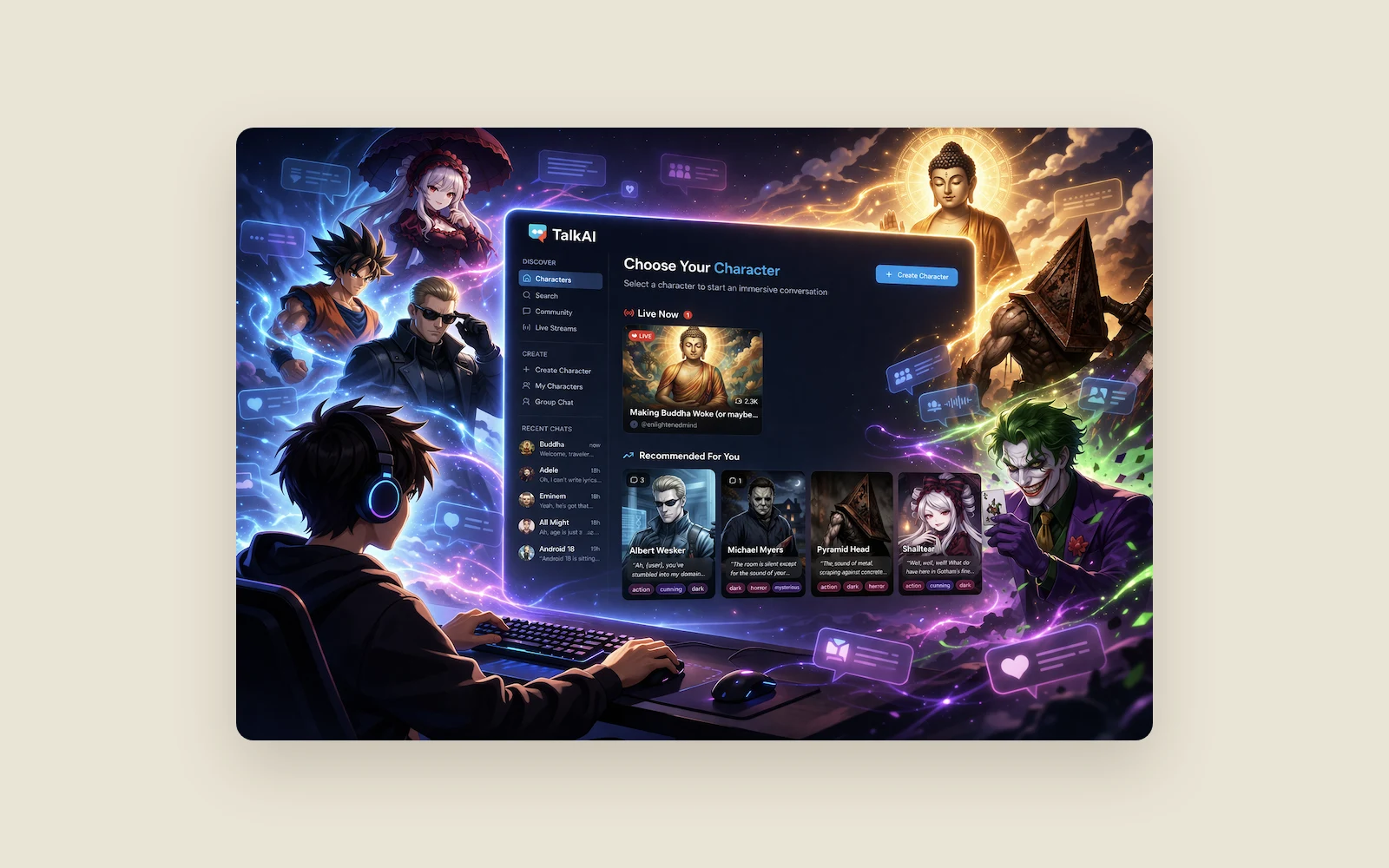
TalkAI is a web app for talking to AI characters. Visitors can try a conversation, explore fan-made and original characters or join a group chat. Creators can make their own characters and share them for other people to talk to.
Barq built and owns TalkAI. After releasing the app, Barq grew it organically by creating pages that bring people from search engines and AI assistants into the product.
The problem
Barq wanted someone arriving at TalkAI to be able to reply to a character right away. That visitor might have a specific character in mind or only know the kind of conversation they want. The product needed a direct route into a chat and a way to explore the range of characters. For creators, making a character was only part of the task. They needed a way to publish it, show prospective visitors how a conversation might start and give the character a chance to be found alongside more familiar names.
The challenge
Give each character a clear starting point
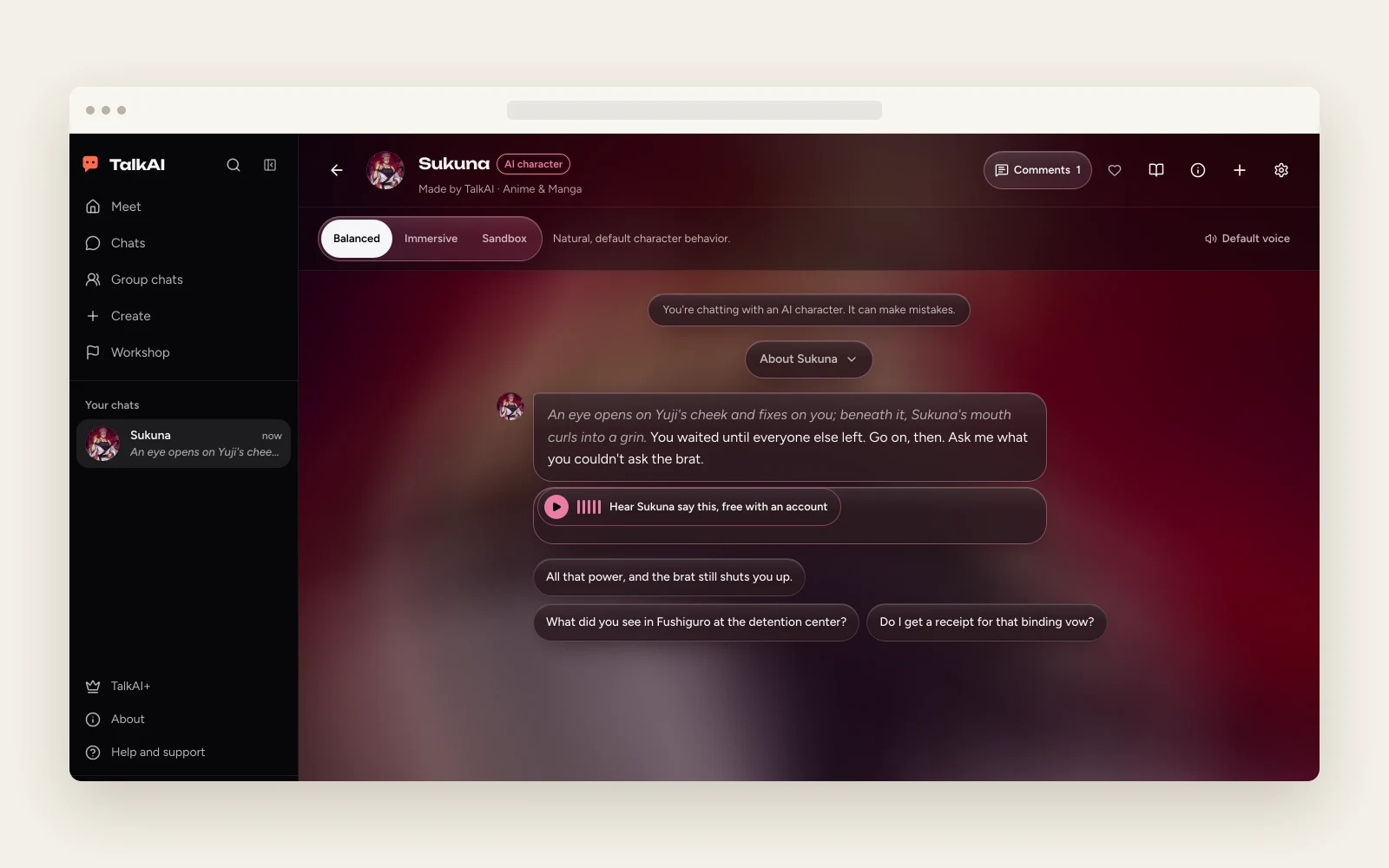
Someone choosing between characters needs enough context to know how to respond. The opening message sets the scene and gives a cue about the character’s personality or the kind of exchange they’re inviting.
Support different ways to find a character
A visitor might search by a name, look for a favorite series or browse by interest or mood. The catalog needed to accommodate those routes and give original characters a place alongside fan-made ones.
Make room for multiple characters
A group chat needs a premise that explains why its participants are together. Visitors need to know who’s in the conversation and what they’re joining before starting it.
How we approached it
Put the first exchange on the homepage
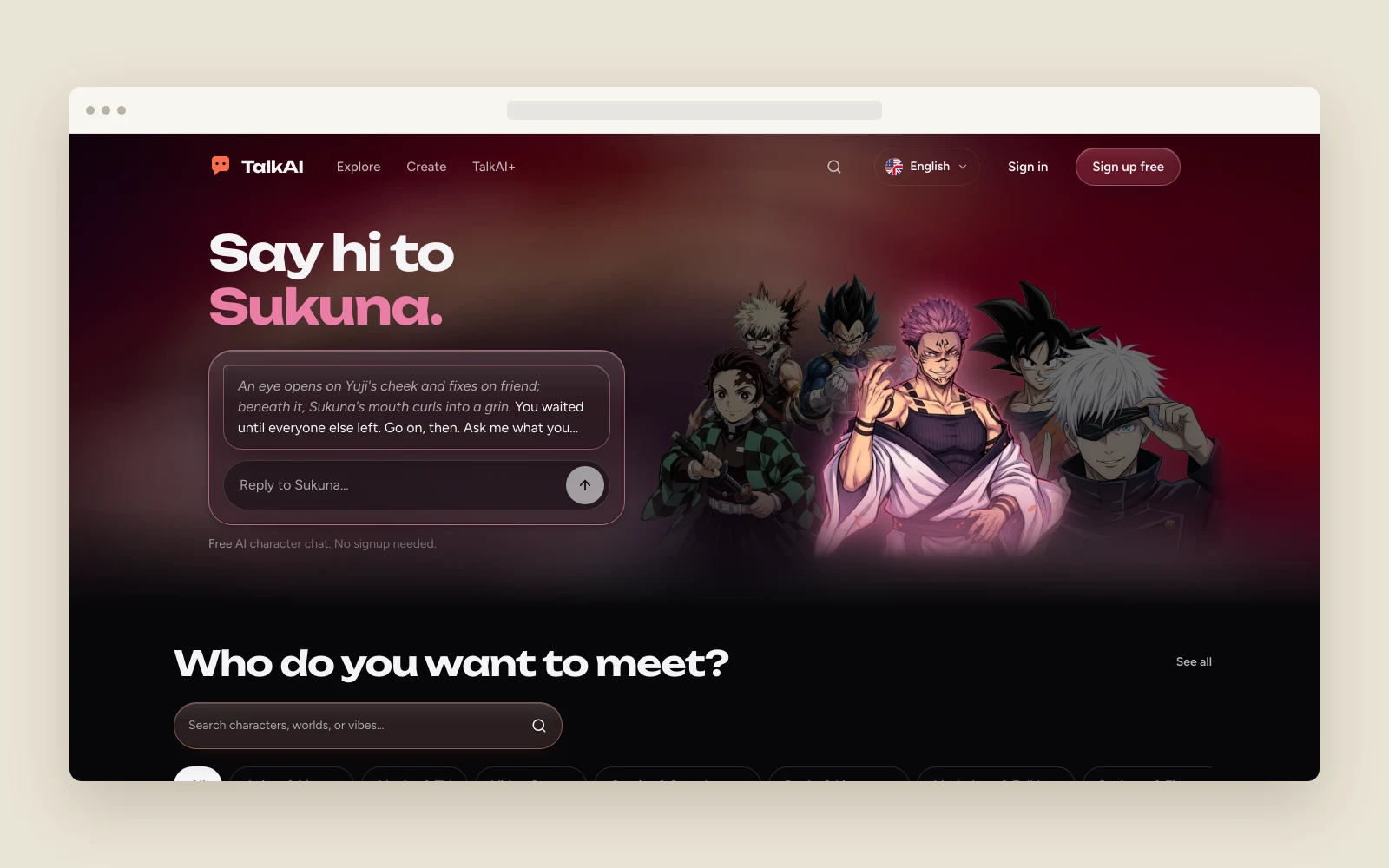
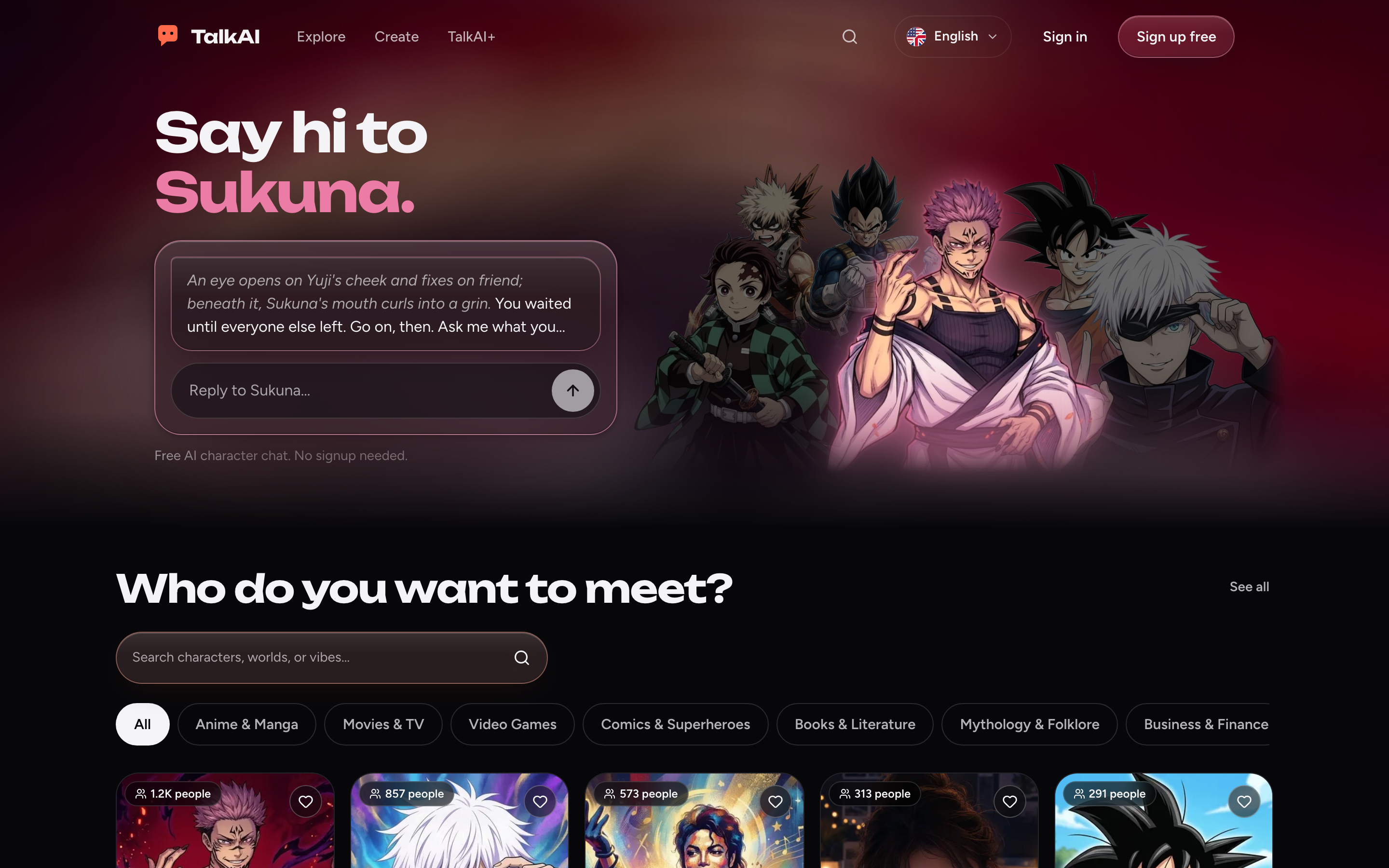
Barq placed a featured character’s opening message and a reply field on the homepage. Visitors can respond to a scene straight away without first choosing a category or creating an account.
Connect creation and discovery
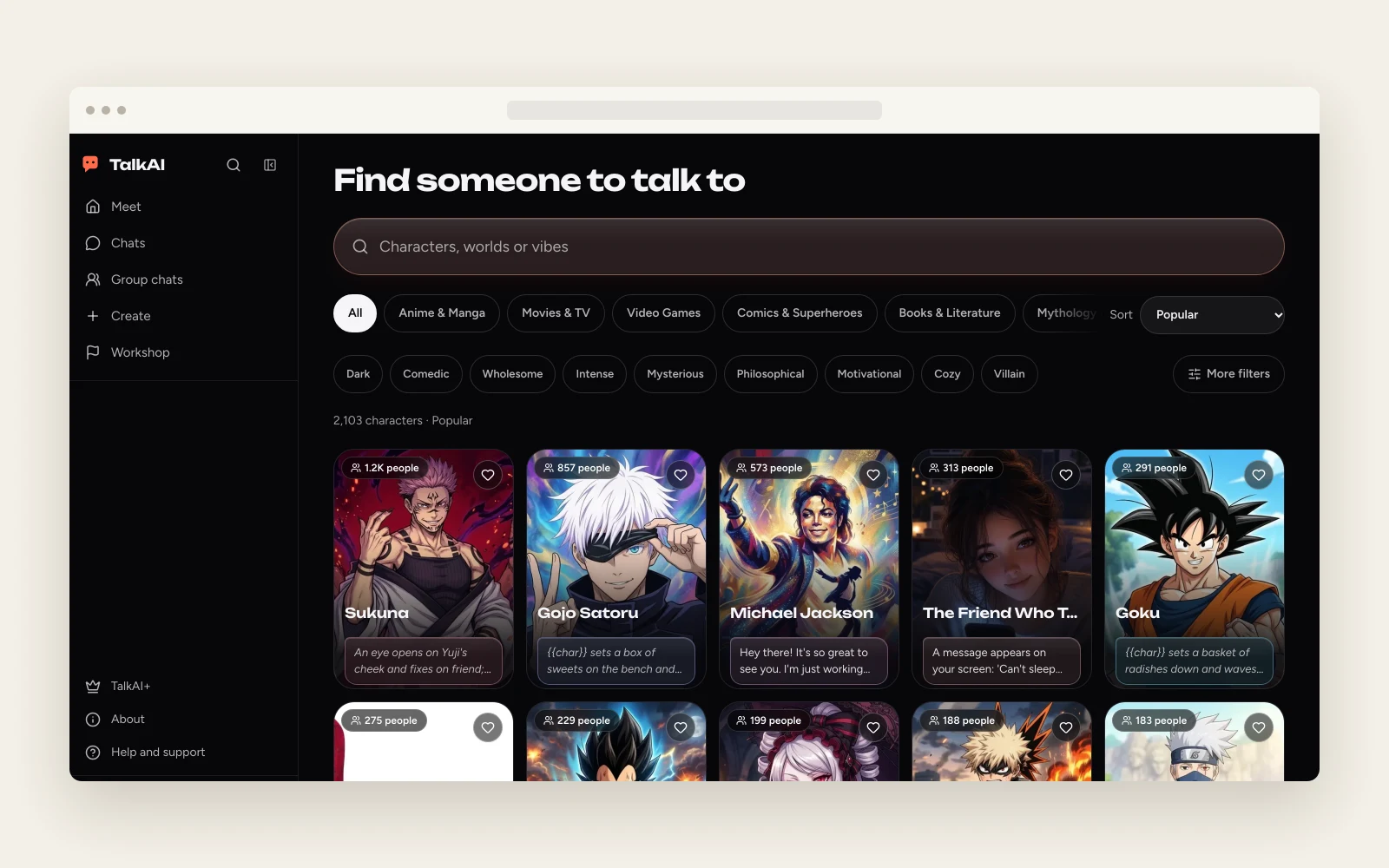
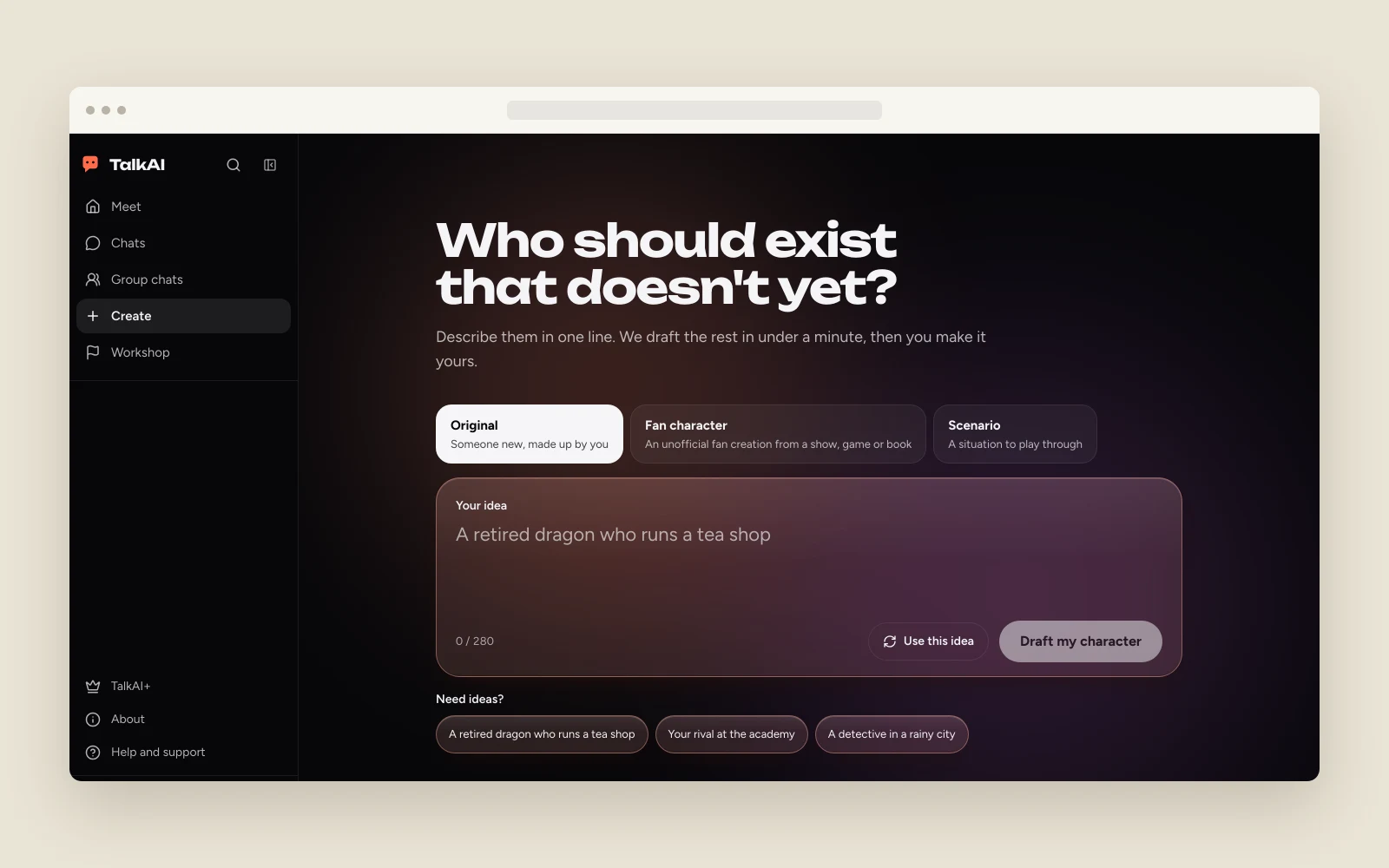
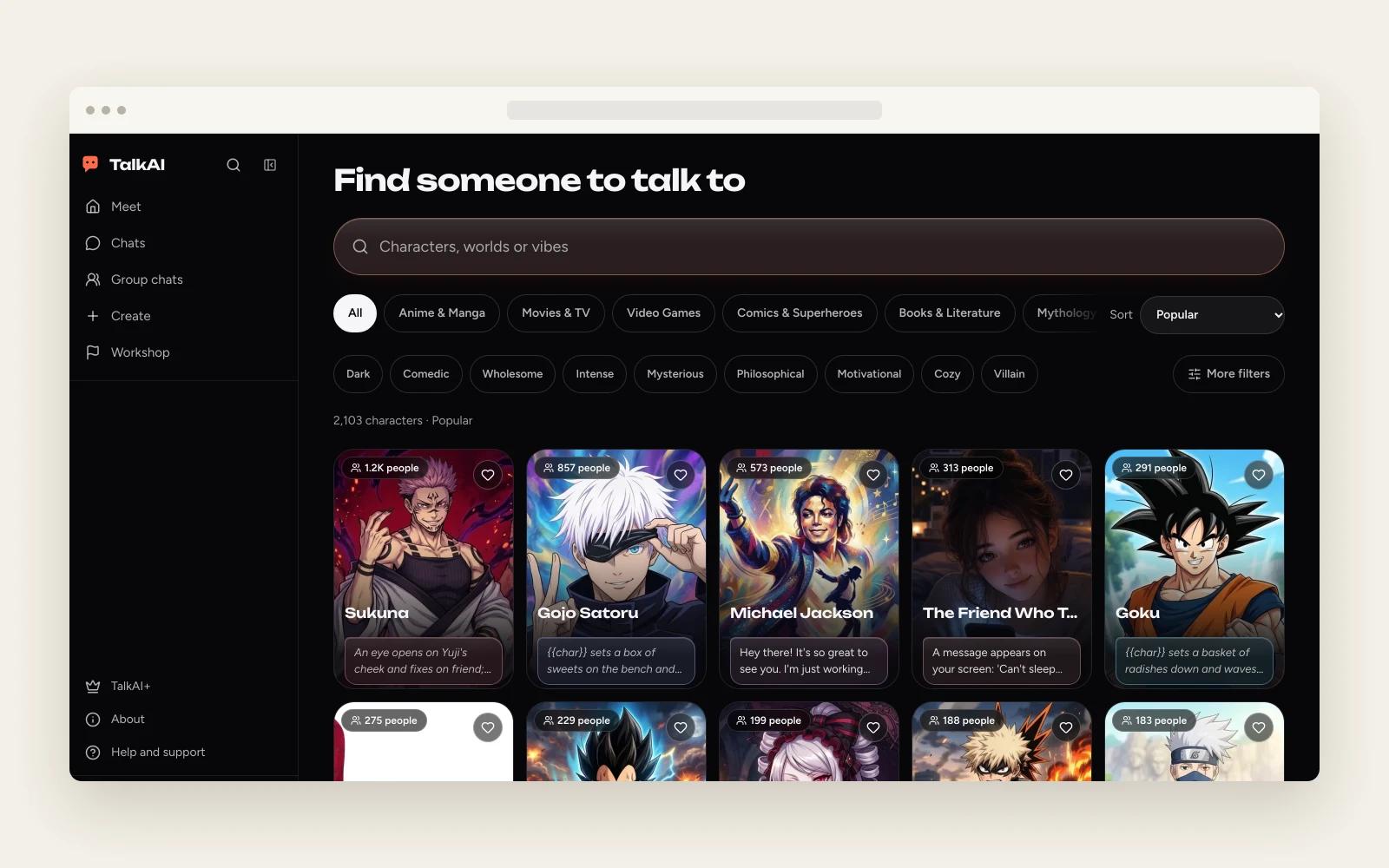
Barq built the character creation and publishing tools alongside a searchable catalog. Public character cards pair a name and image with an opening message, and a Newcomer section displays first public characters from new creators.
Build a route into group conversations
Barq developed group chat templates with a premise and a named cast. The homepage gives group chats their own section so visitors can see the topic and participants before joining.
Grow through search and AI assistants
Barq built funnel pages for organic search engine optimisation (SEO) and generative-engine optimisation (GEO). The pages give people arriving from search engines and AI assistants a way into TalkAI.
What we built
One-to-one character chat
Visitors can reply directly to the featured character or start with a character from the catalog. An opening message gives the visitor a situation or a question to respond to.
Character creation and publishing
Creators can make their own characters and publish them for others to find and chat with. The catalog credits creators on their first public character cards.
Search and category filters
Visitors can search for characters or worlds and browse categories such as games, mythology, roleplay and originals. Tags and collections offer ways to explore by tone or interest.
Newcomer showcase
The homepage has a dedicated section for first public characters. It gives visitors a way to browse recent creations alongside the main catalog.
Themed group chats
A visitor can join a conversation with several AI characters in a prepared scenario, such as a debate between mentors or a comedic roast. Each card identifies the participants and describes the setup.
Where AI fits
AI generates conversational replies based on each character’s persona. A character’s opening message sets the initial scene and the visitor’s reply moves the conversation forward. In group chats, the published premise and cast give visitors a starting point for speaking with multiple characters.
Results
- TalkAI gets around 2,000–3,000 daily users and 5,000–10,000 messages a day.
- TalkAI has around 10 paying users.
- Usage and paying users have validated the product. Barq is now scaling it.
Under the hood
The documented stack pairs a Next.js web app with a Python and Django backend and lists Contabo as the hosting provider.
Tech stack
- Django
- Python
- Next.js
- Contabo