Overview
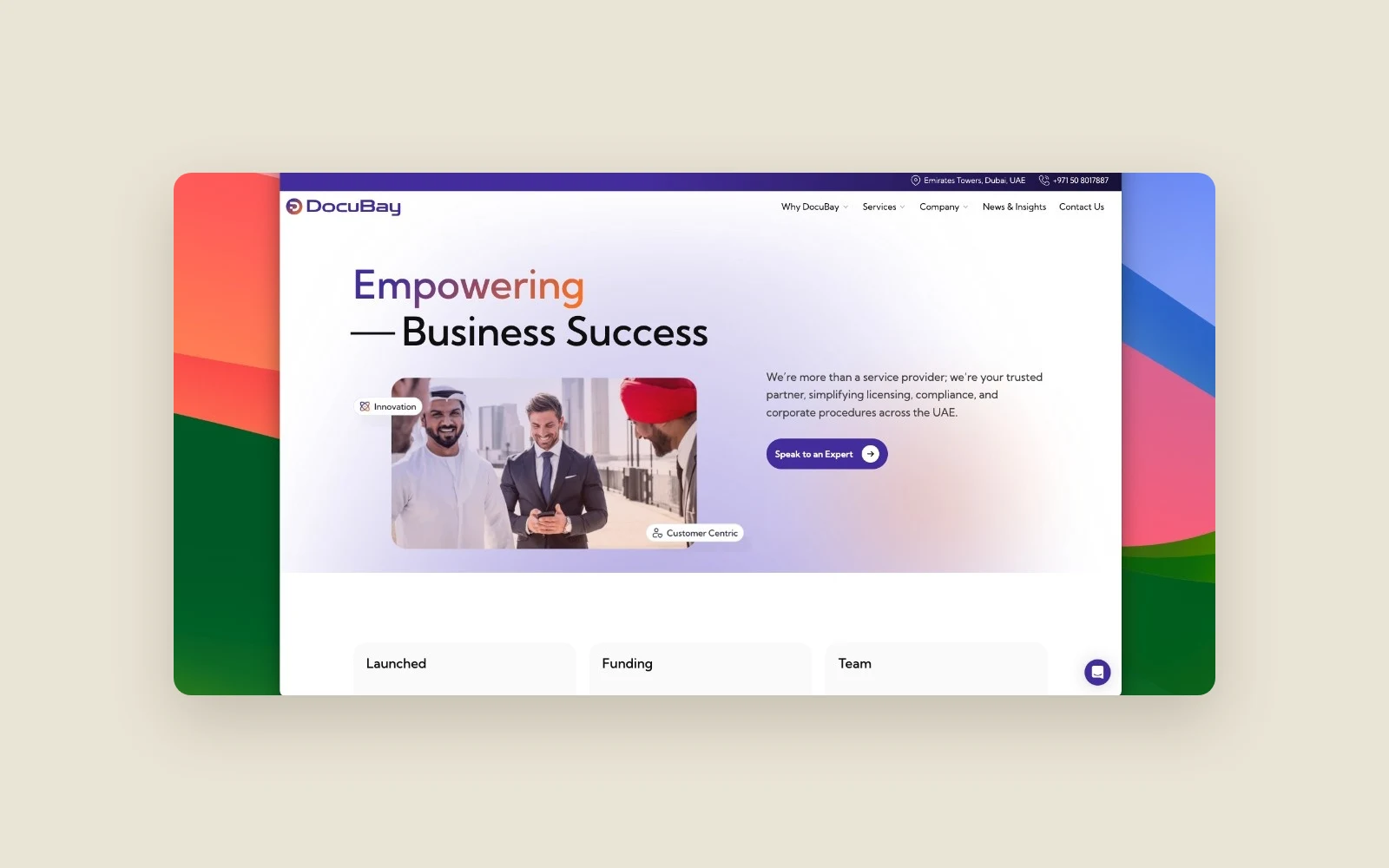
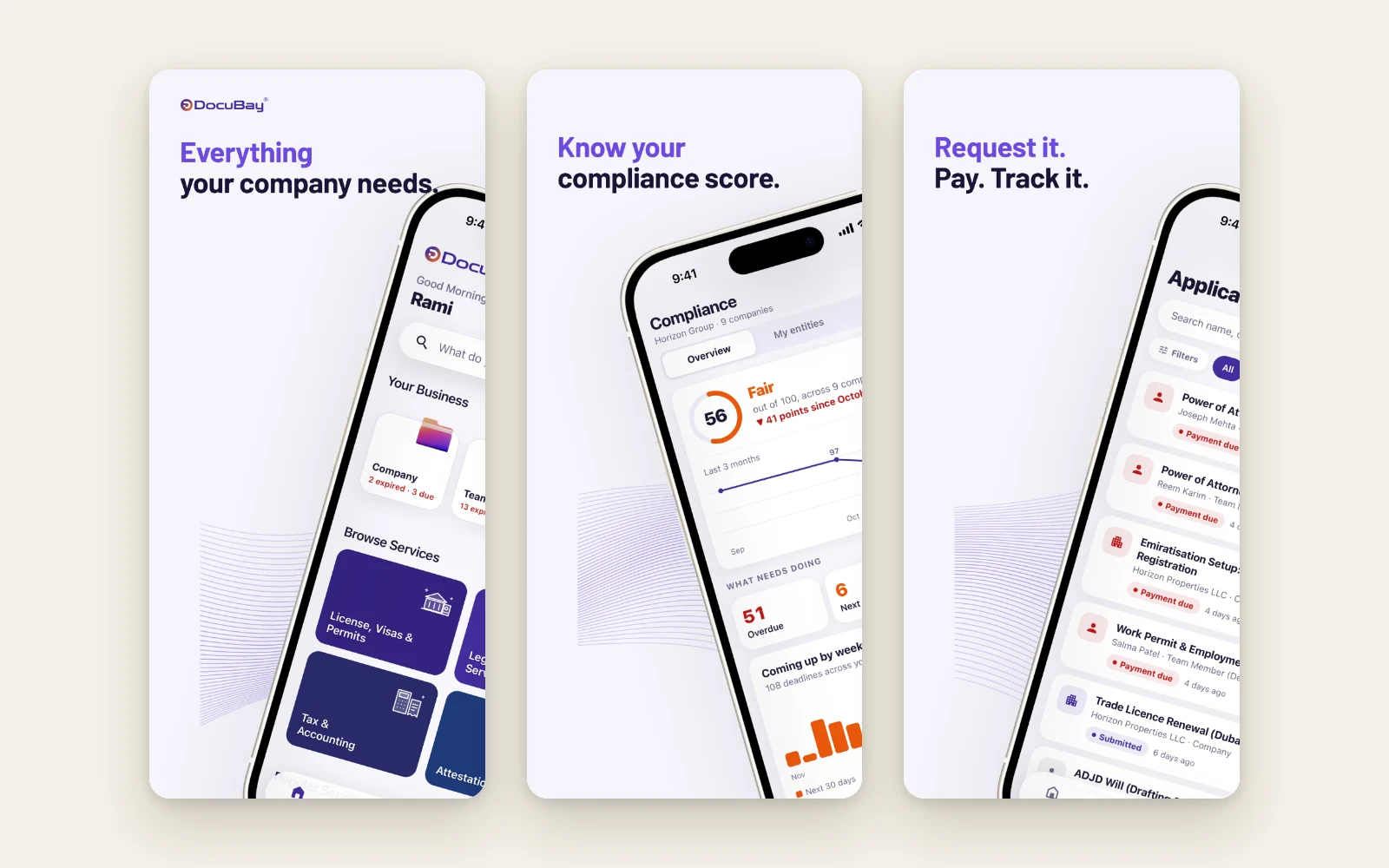
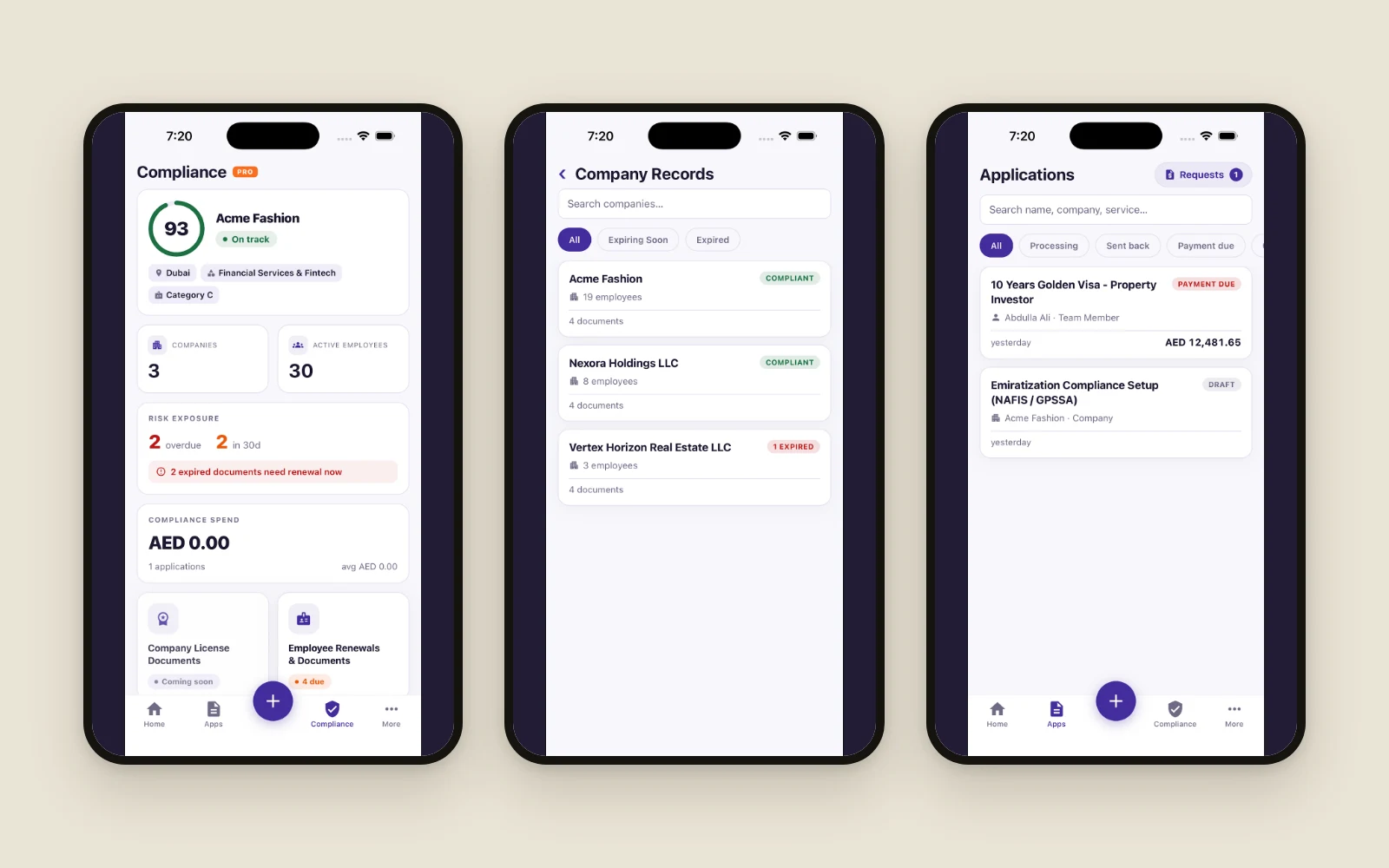
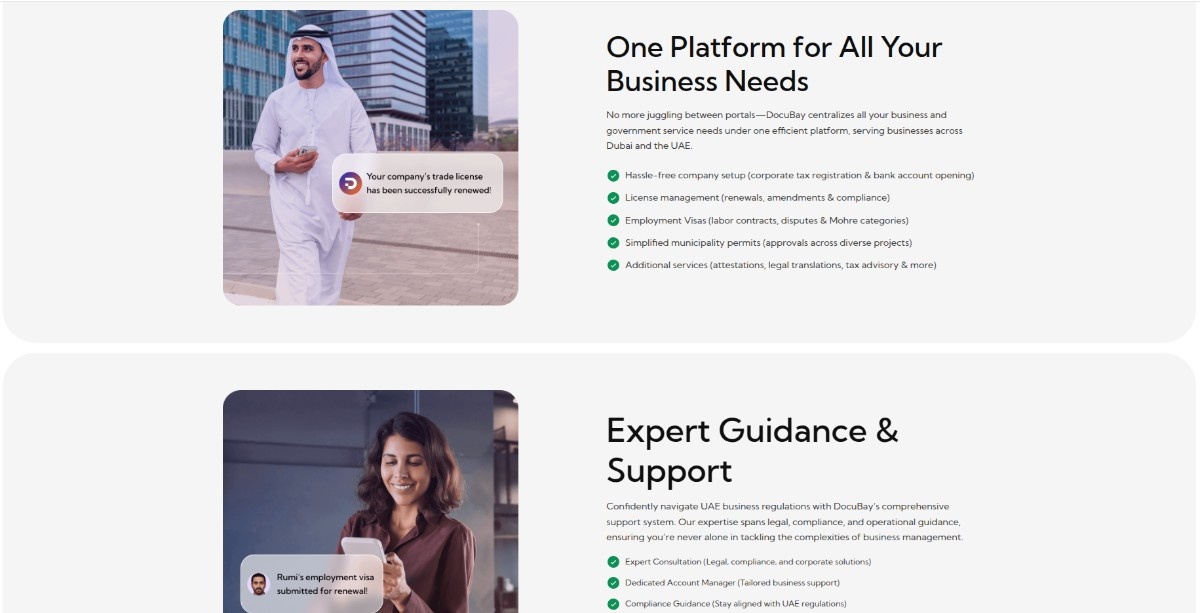
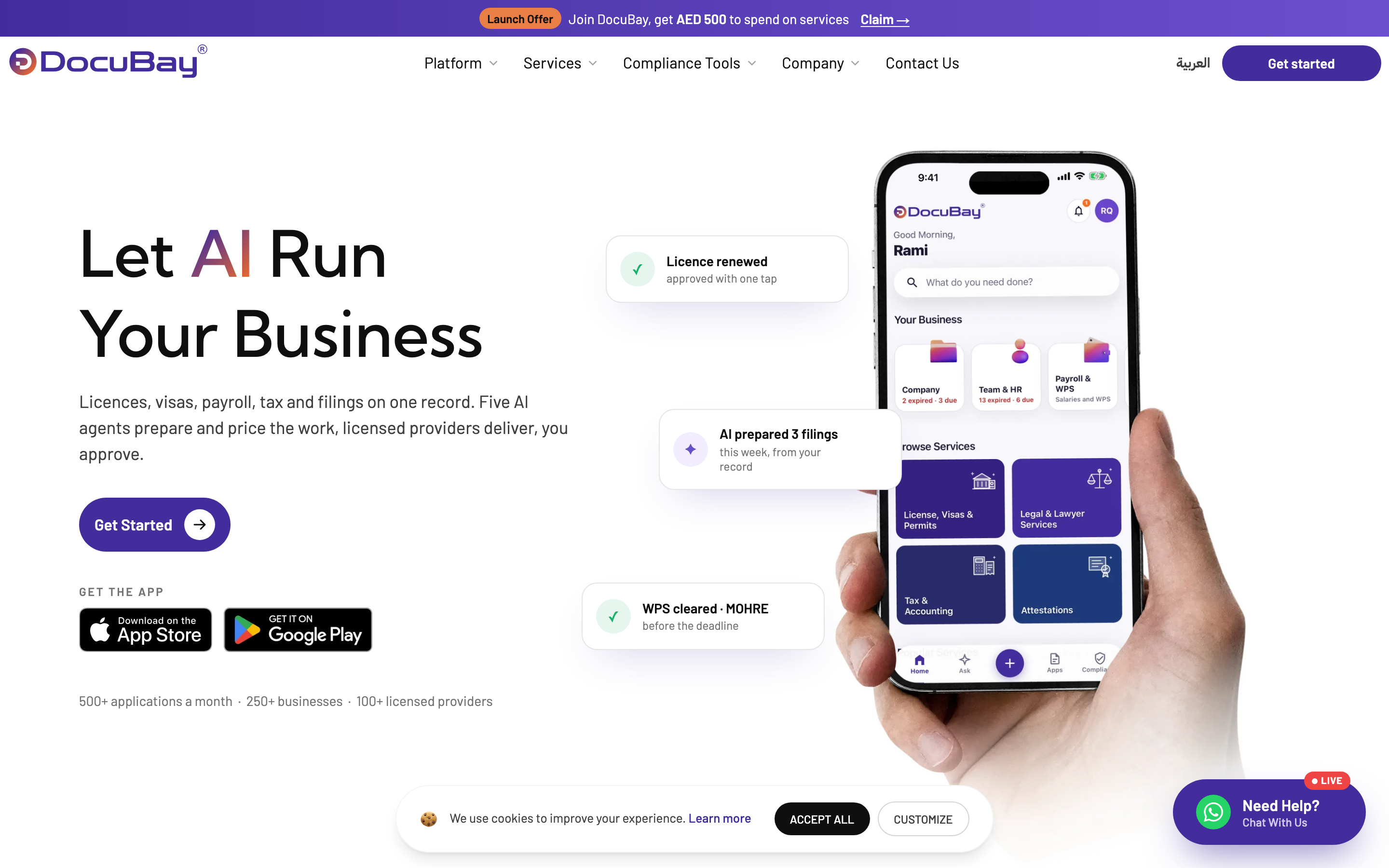
DocuBay helps businesses in Dubai and across the UAE manage government and corporate paperwork. Its public app lets companies keep records together, request help with work such as trade licence renewals or visa applications, track requests and pay government and service fees. Licensed providers carry out the regulated work after the business approves the request.
DocuBay hired Barq for a defined piece of that product. Barq built the internal dashboard, delivered the first working version of the platform's document intelligence, connected a local payment processor and built a catalog that let administrators configure forms for different services.
The problem
DocuBay wanted businesses to manage services and documents against one company record. A trade licence renewal and a visa application need different information from the applicant. Both requests had to fit in the same portal, and DocuBay's staff needed to be able to configure each form. The work continued after a customer submitted a request. DocuBay's internal team needed to see which applications were open, where they stood and which dates were approaching. Businesses also needed a way to pay government and service fees through the platform, using a local provider.
The challenge
Accommodating different service requests
DocuBay covered several types of business paperwork. Administrators needed to be able to define forms for different services and use them in different parts of the portal.
Keeping applications and deadlines visible
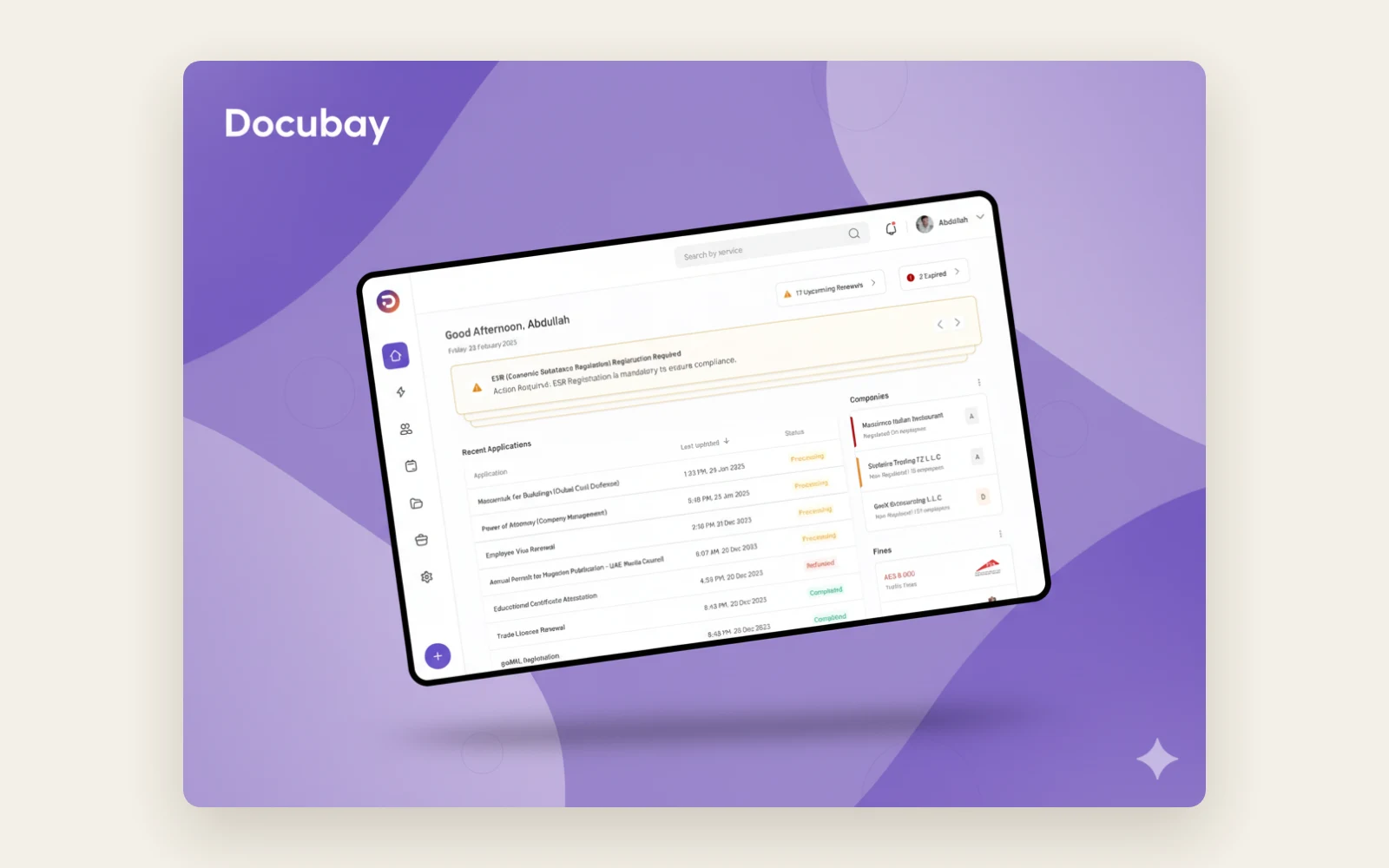
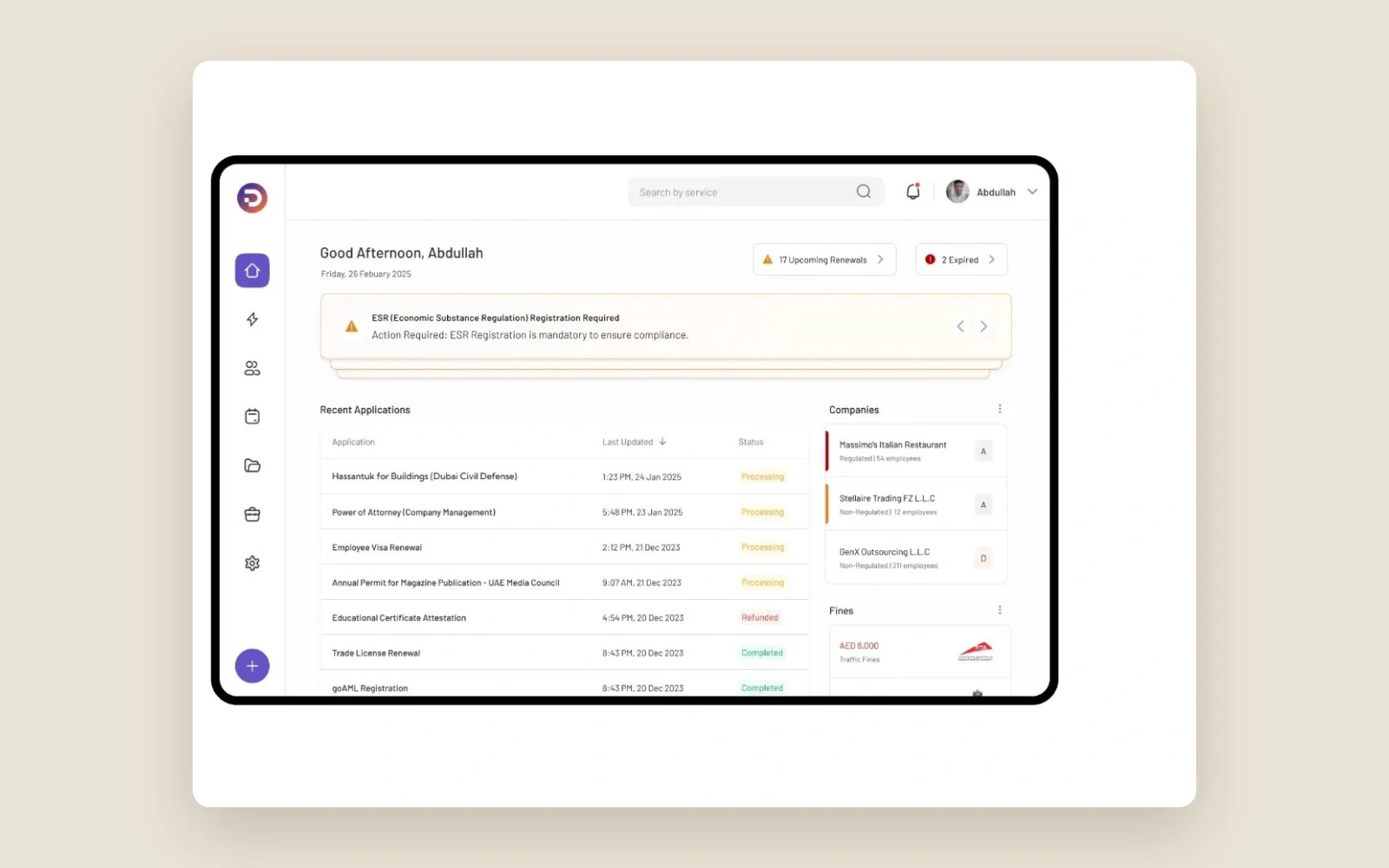
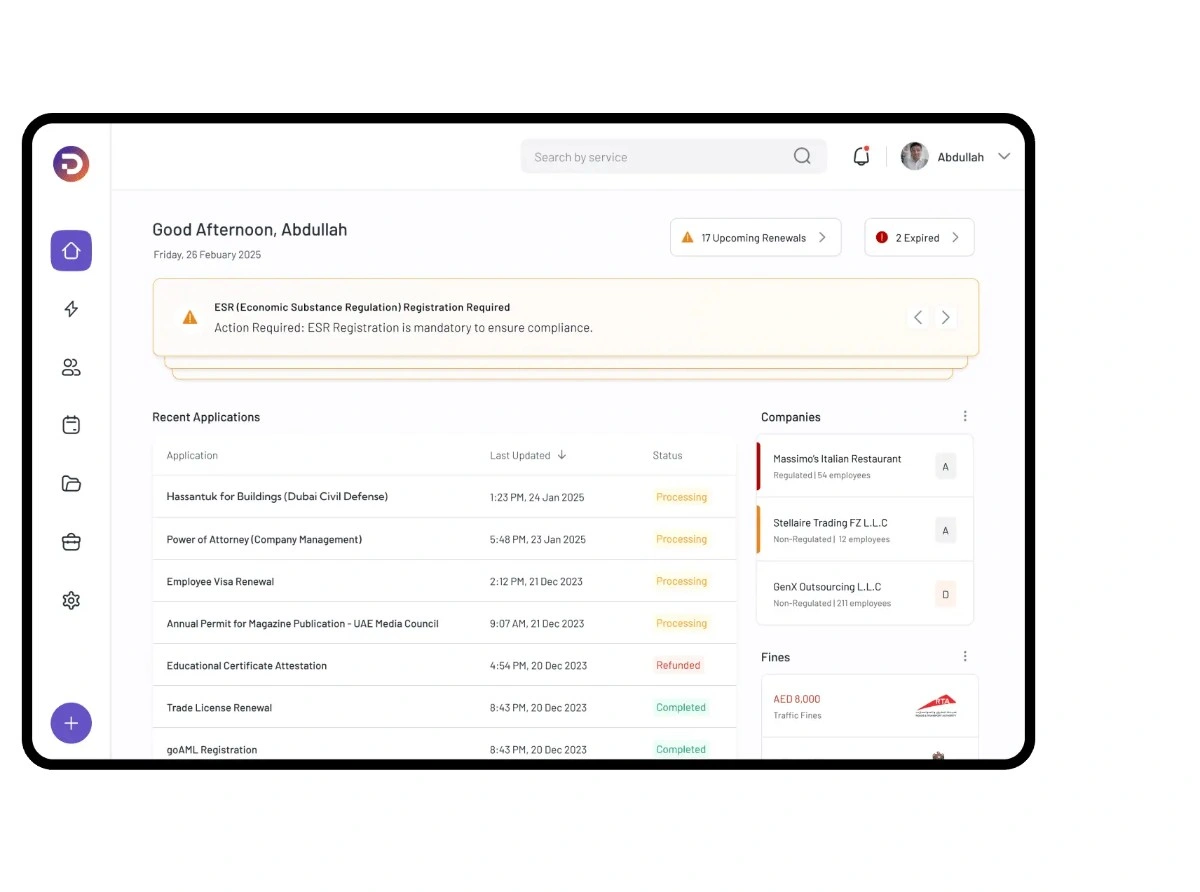
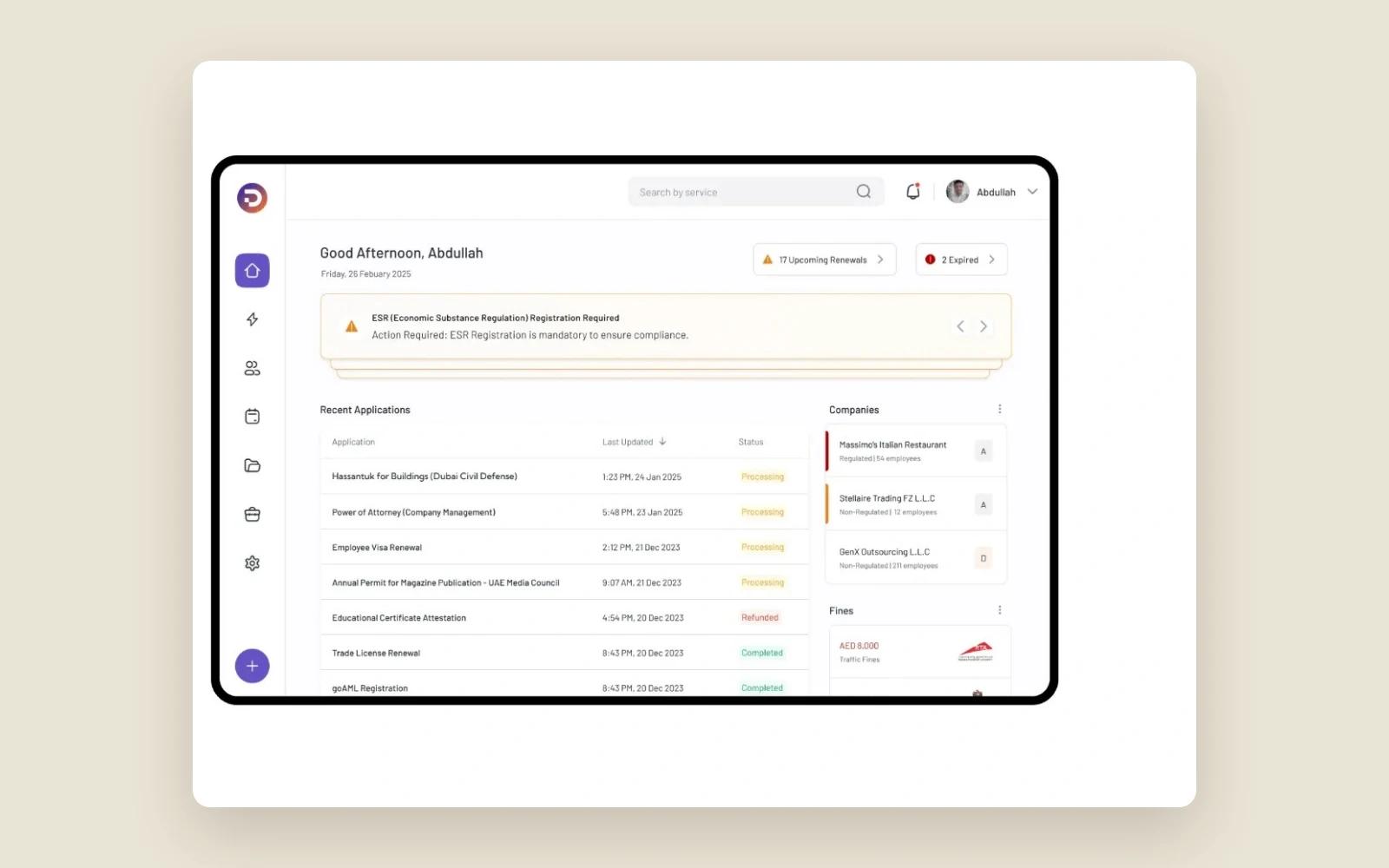
The internal team needed to see recent requests and their status in the same workspace as company records and approaching renewals. The archived dashboard shows how much of that information needed to fit on one screen.
Taking payments through a local provider
The platform needed to let businesses pay government and service fees. Barq's assignment included connecting DocuBay to a local processor to support payments through the platform.
How we approached it
Build the internal portal
Barq built the dashboard and the backend for the internal application. The dashboard gave DocuBay's staff one screen for reviewing recent applications and seeing renewal notices alongside company information.
Give administrators control of service forms
Barq built a configurable catalog so administrators could create forms and services for the different requests the portal needed to handle. The ability to change a form sat with the people managing the service catalog.
Deliver document and payment capabilities
Barq brought the first version of the document intelligence into working form and integrated the local payment processor. Each was a distinct deliverable in the internal platform engagement.
What we built
Internal application dashboard
The dashboard put recent applications, status labels, company cards and renewal notices in view for DocuBay's internal team.
Configurable service catalog
Administrators could create custom forms and services for use in different parts of the portal. That let the catalog accommodate distinct request types within the same application.
First version of document intelligence
Barq delivered the first working version of this capability for DocuBay's document workflow.
Local payment processing
Barq connected the platform to a local payment processor so DocuBay could accept payments through the portal.
Results
- DocuBay's internal team received a dashboard for reviewing applications and renewal information.
- Administrators could create and configure forms for different services in the portal.
- The platform had a local payment processor integration and a working first version of document intelligence.
Under the hood
The internal portal included both a frontend and a backend. Its form catalog made the services and their forms configurable by administrators inside the application.
Tech stack
- Python
- Django
- Next.js
- AWS