Overview
FieldCore AI was a Windows proof of concept for people who need to find information in technical manuals. Users could ask a question in plain language and receive an answer based on passages retrieved from the documents.
Barq built the prototype for Christian M., from the pipeline that prepared the manuals for search to the chat interface used in the demo. We packaged the result as a Windows executable and prepared setup documentation for handover.
Every milestone was completed on time and exactly as outlined in the scope
The problem
Christian wanted to see whether someone could get an answer from a technical manual by asking a question as they would phrase it themselves. The material included PDFs several hundred pages long, with tables and diagrams alongside prose. Someone looking for a particular detail could have a long document to work through. The first milestone was meant to demonstrate the idea on Windows. That called for a complete path through the prototype, from preparing the documents to asking a question in a simple interface and getting an answer drawn from the manuals.
The challenge
Prepare long PDFs for retrieval
The PDFs put prose, tables and diagrams on the page. The prototype needed a text representation that could be split into searchable passages while keeping enough surrounding material for the retrieved text to be useful.
Match a plain-language question to manual text
The wording of a question can differ from the wording in technical documentation. The prototype had to find passages relevant to the meaning of the question and give those passages to the model before it answered.
Deliver a usable Windows demo
The client needed a basic interface and a working executable. That made the Windows packaging and setup instructions part of the delivery alongside the document processing and search work.
How we approached it
Scope the first milestone
Barq worked from a brief for a small proof of concept. The demo needed to cover manual ingestion, question answering and a Windows interface, with an executable and documentation for handover.
Build the document-to-answer pipeline
Barq converted PDFs to Markdown, split the material into passages and indexed their embeddings in Pinecone. We connected retrieval to the model prompt and tuned the prompt for the kinds of questions the prototype was meant to handle.
Refine and hand over the prototype
Barq shared updates as milestones progressed and refined the prototype with Christian. We packaged the Windows executable and prepared documentation so the client could run and demonstrate the work.
What we built
PDF-to-Markdown conversion
A Python pipeline converted the manuals from PDF into Markdown. This gave the next stage a text format to work with across long documents.
Passage indexing
The pipeline divided each converted document into passages and turned them into embeddings, numerical representations of their meaning. Pinecone stored those embeddings so relevant sections could be retrieved for a question.
Answers based on retrieved passages
The application added the passages returned by retrieval to the model prompt. This gave the model relevant manual text to draw on when composing its answer.
Windows chat interface
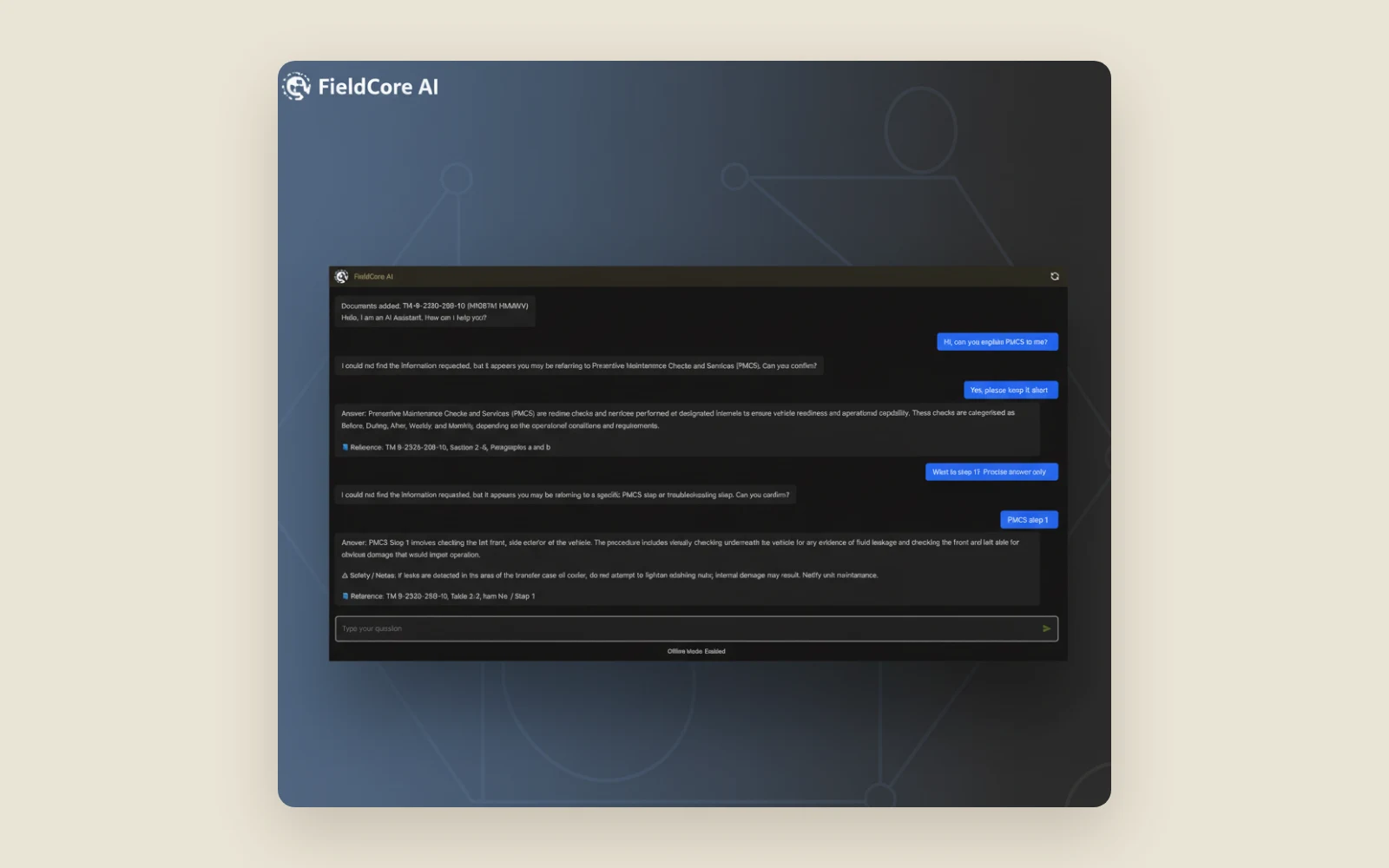
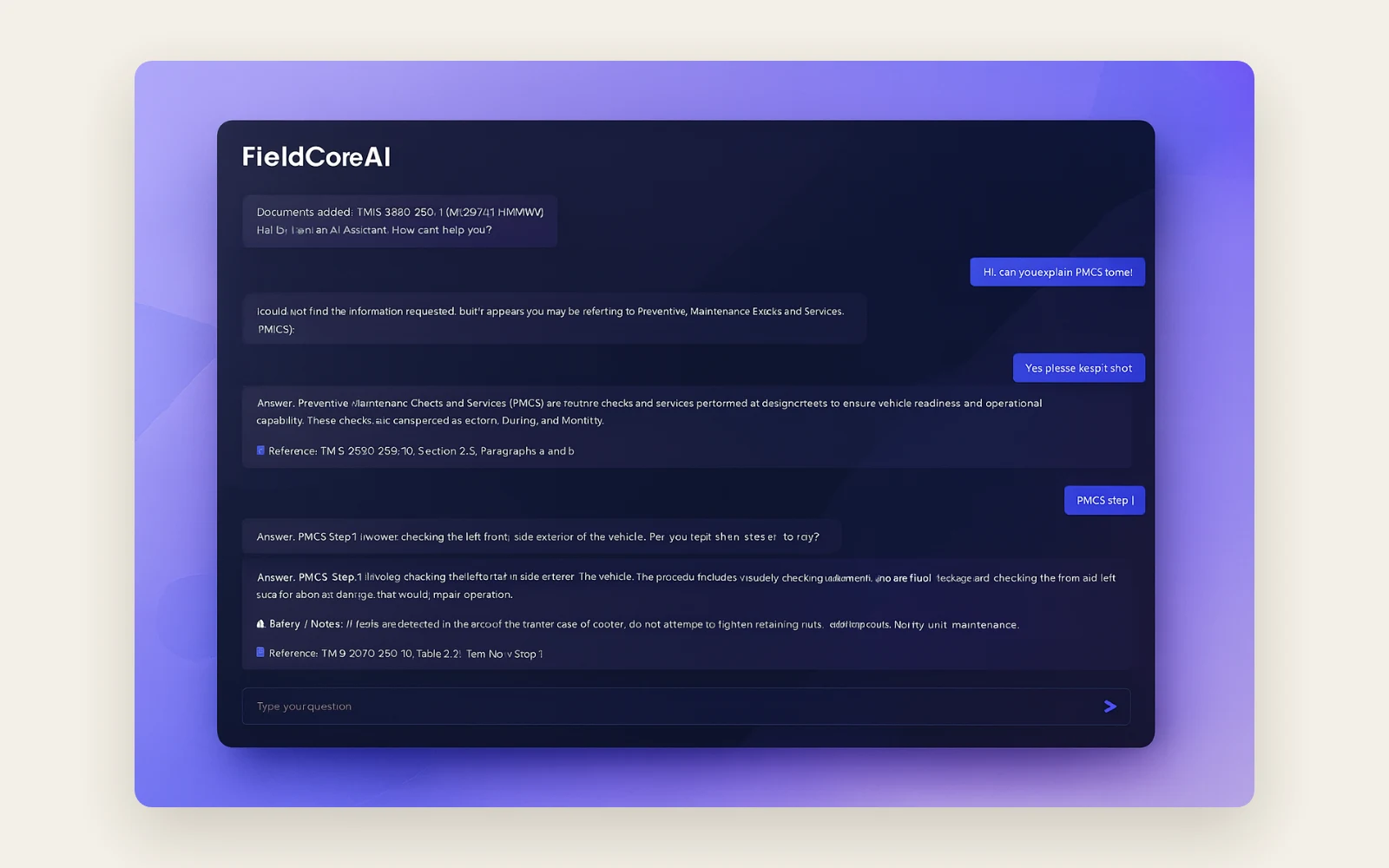
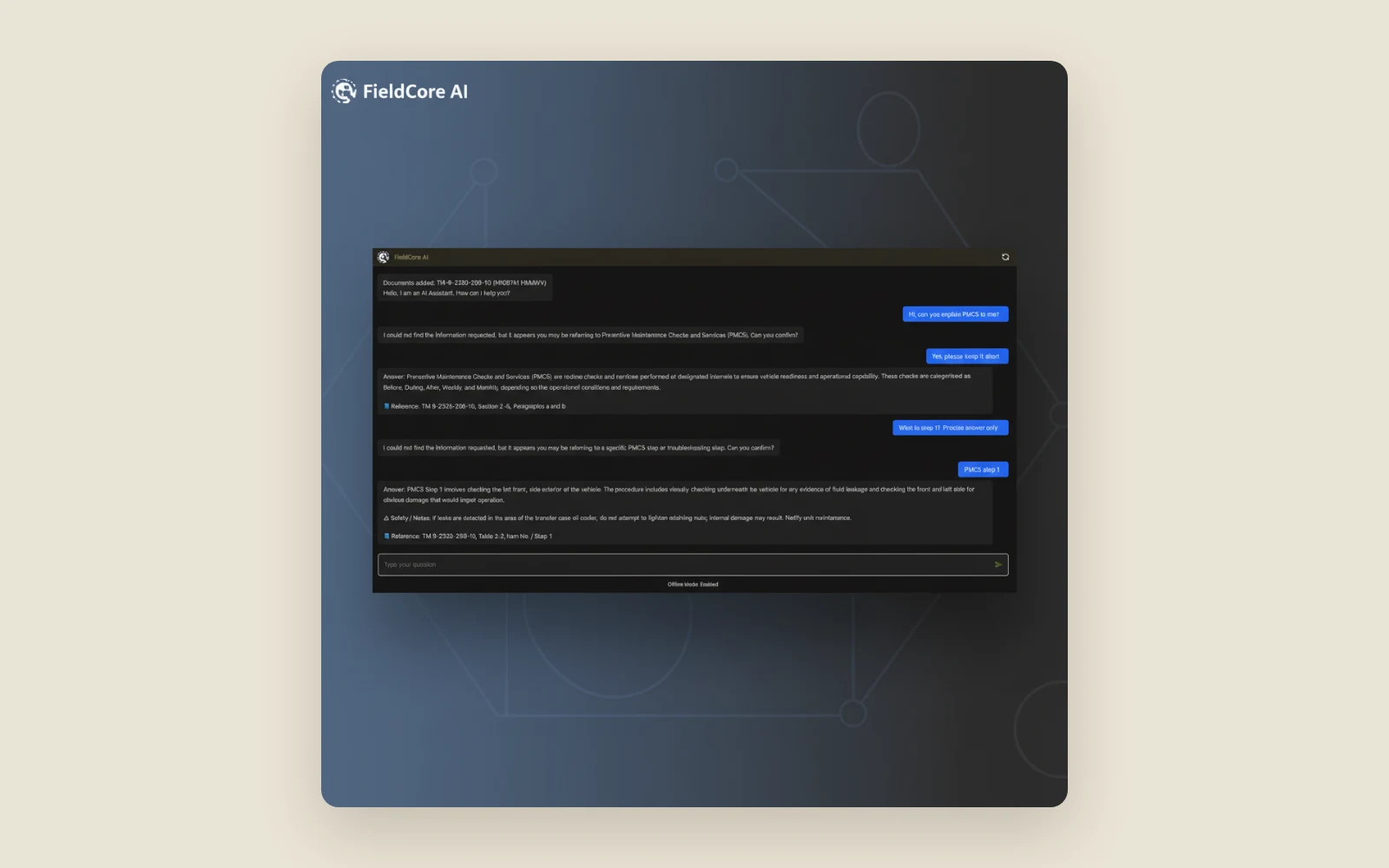
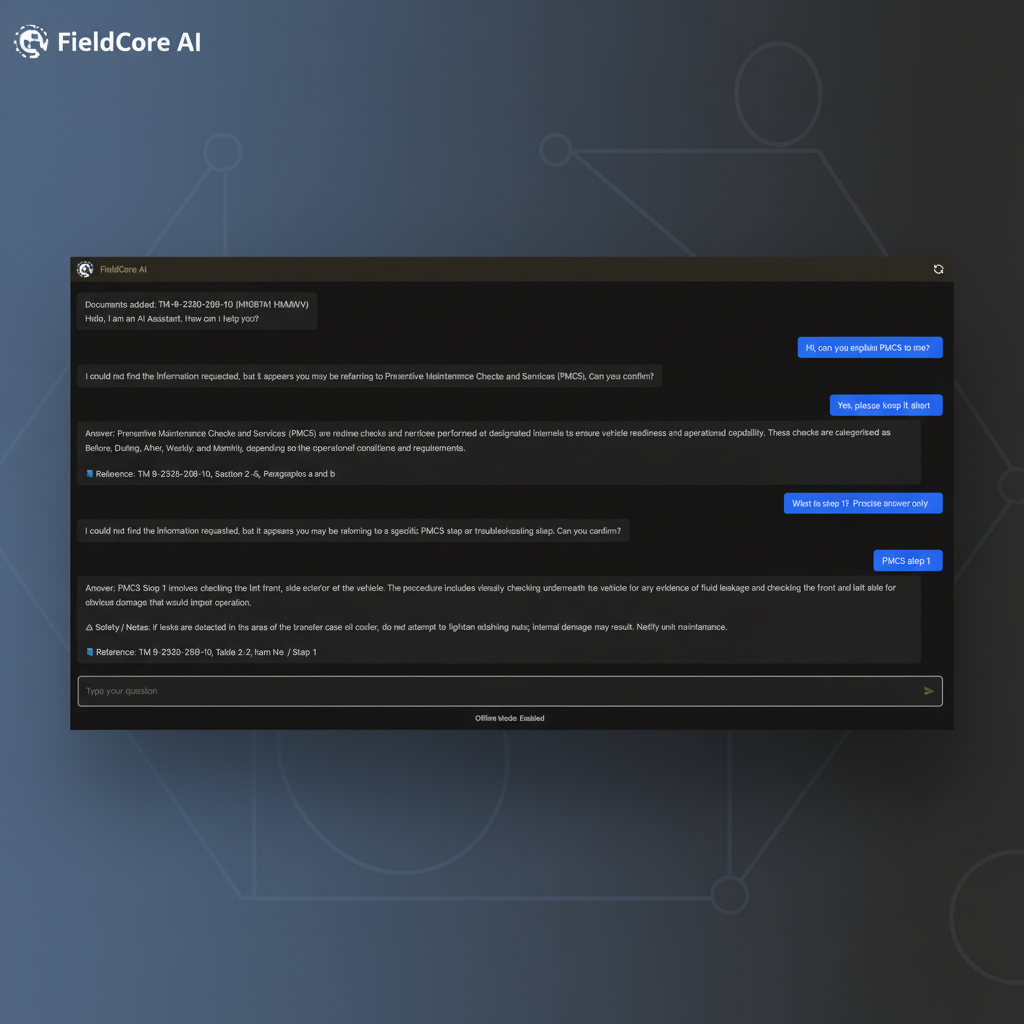
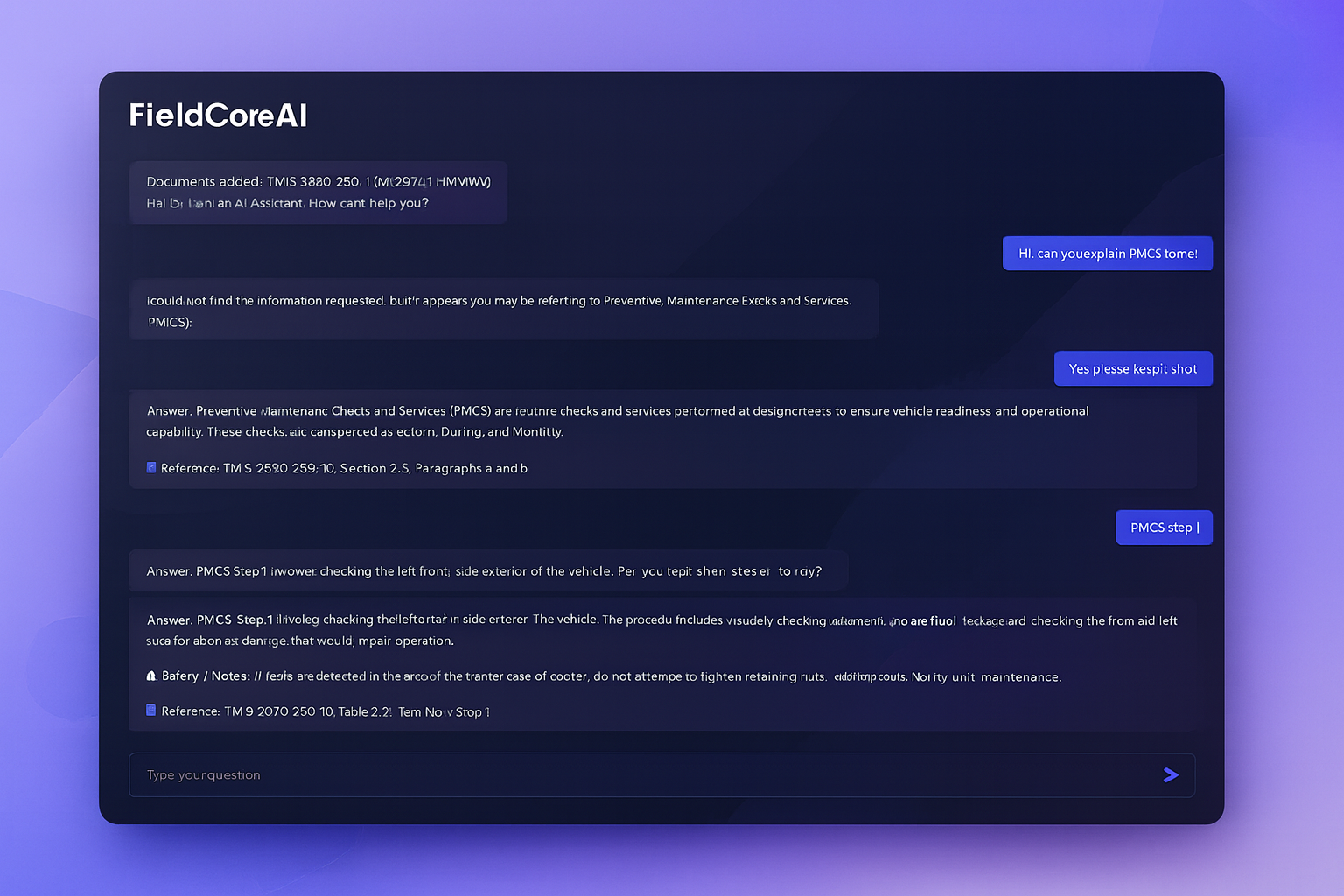
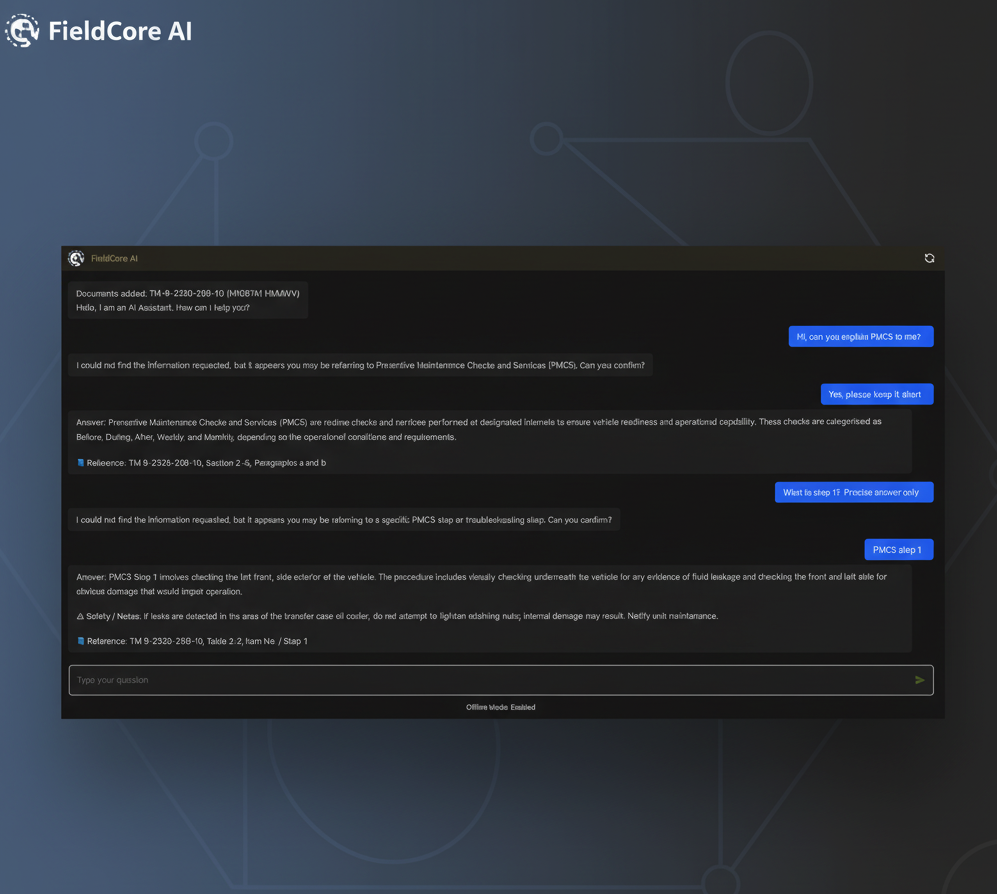
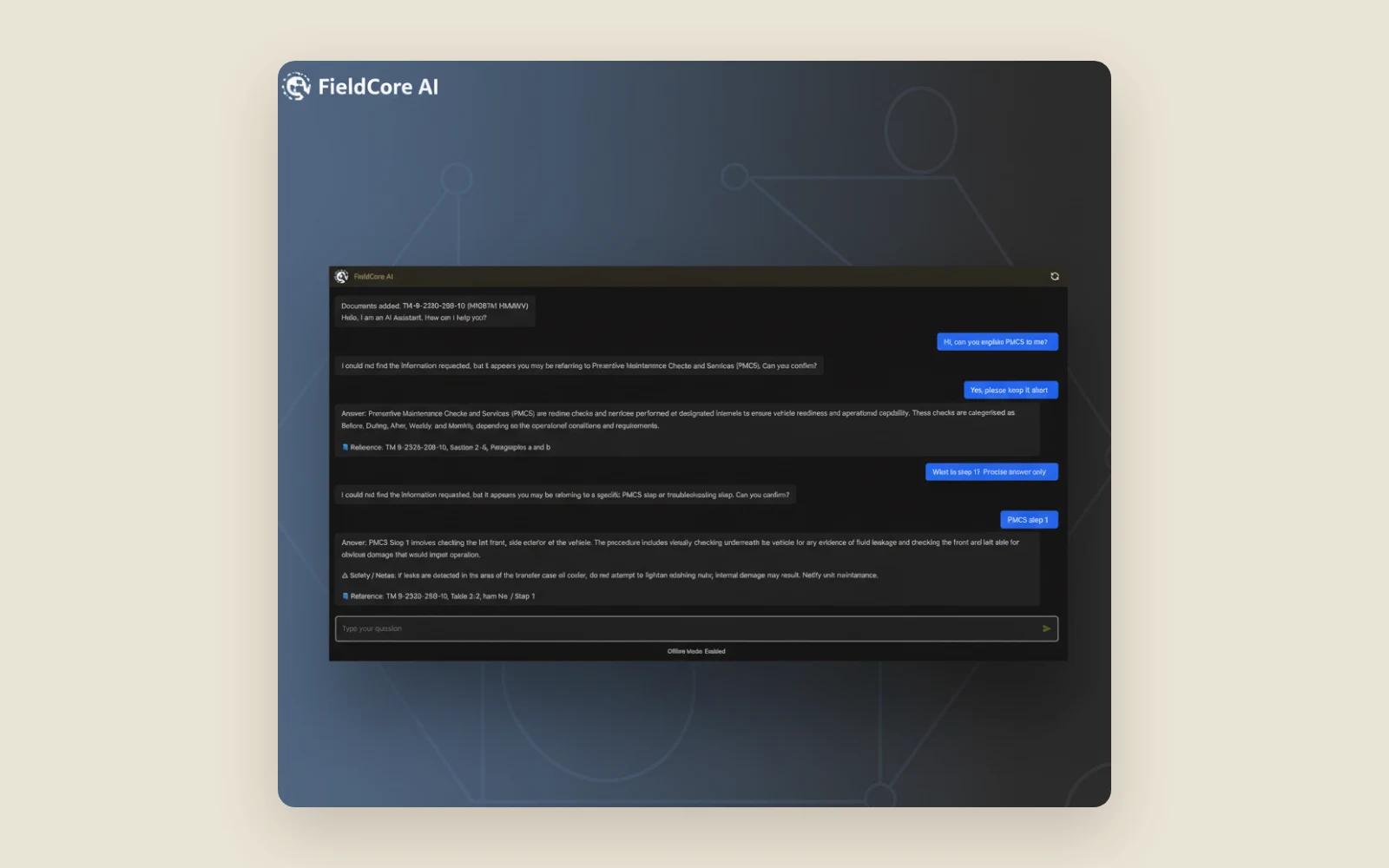
Users entered questions and read responses in a Windows chat window. The portfolio preview shows the layout with sample answers and references to the manuals.
Where AI fits
FieldCore AI used retrieval-augmented generation. Vector search identified passages related to the question, and the language model used those passages to compose a response. The manual text supplied to the model was selected at question time, so each answer had context drawn from the client’s documents.
Results
- The prototype demonstrated plain-language search and answers based on retrieved manual text.
- Christian received a working Windows executable and setup documentation for handover.
- Christian reported on Upwork that Barq delivered every milestone on time and within scope.
Under the hood
Python handled document preparation and Pinecone held the passage index. Preparing and indexing the manuals separately from question answering let the prototype look up relevant text at question time without passing the entire manual into the prompt.
Tech stack
- Python
- Pinecone
- Vector search
- Retrieval-augmented generation