Overview
Heirloom operates vacation rentals designed for group stays in destinations including New Orleans, Savannah and Nashville. The work behind each stay includes preparing properties for arrivals, responding to guest issues, monitoring local compliance notices and keeping accounts across the portfolio.
Barq helped Heirloom design, pilot and implement automations in the systems its staff already used. The program spans nine departments and includes AI-assisted work such as drafting maintenance tickets, as well as scheduled checks and reports.
Great experience working with Hammad and his team on our AI training rollout!
The problem
Heirloom’s teams checked properties, filed notices, reviewed ledger entries and turned guest messages into maintenance tickets by hand. Each task started in a different place. A guest issue could be buried in a Slack conversation, a new violation could be waiting on the city portal, and knowing the condition of a pool could take a site visit. Some jobs repeated daily, while others returned with every month-end close. The staff doing those checks also had to decide what needed action and hand it off to the right team.
The challenge
Catch time-sensitive exceptions
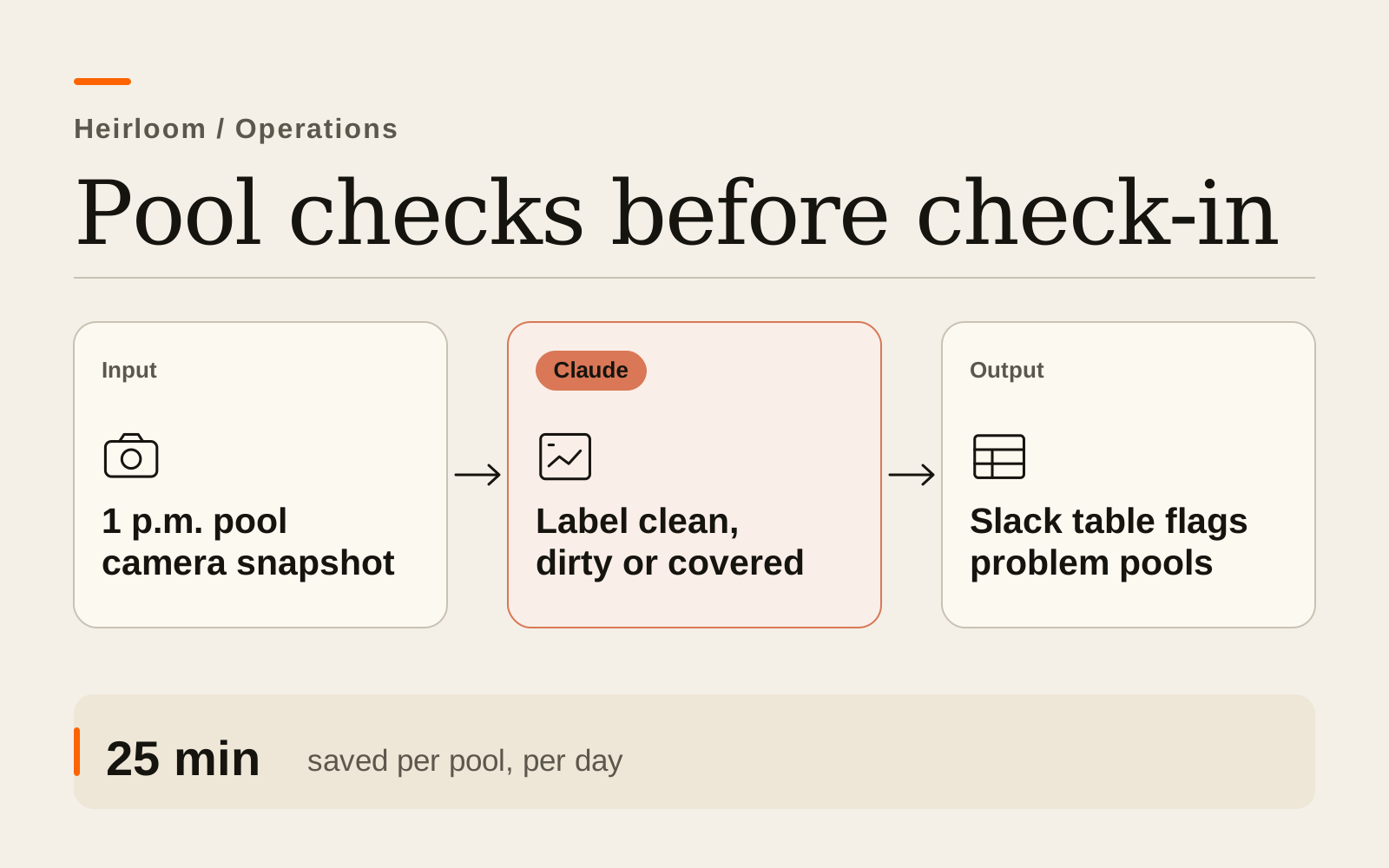
The pool team needed to see problem pools before afternoon check-ins. Compliance staff searched the New Orleans code enforcement portal property by property, then gathered evidence and passed each new notice to legal. In both cases a missed check could leave a problem unseen until a guest or the city brought it to the team’s attention.
Preserve the team’s review decisions
The ledger needed screening against rules and judgment calls that came from the accounting team. Maintenance work orders and guest review replies also needed staff judgment before they went out.
Write to a pricing sheet that changes week to week
Revenue managers recorded pricing decisions in Asana and copied changes into a Google Sheets model. Rows regularly moved, so a write based on yesterday’s sheet position could change the price for the wrong property.
How we approached it
Start with the staff’s existing procedures
Barq used the accounting team’s own rubric for ledger review. For dispatch, the automation drew the relevant details from the guest conversation and put them into a consistent work-order format. Each team could review the output against its usual work.
Deliver work in the tools teams already use
Pool teams receive their daily photo table in Slack. Compliance and guest services get Asana tickets with the evidence or draft reply already attached. For payment plans, the automation reads the custom fields staff already use in Guesty and prepares an on-demand report.
Pilot recommendations alongside dispatch
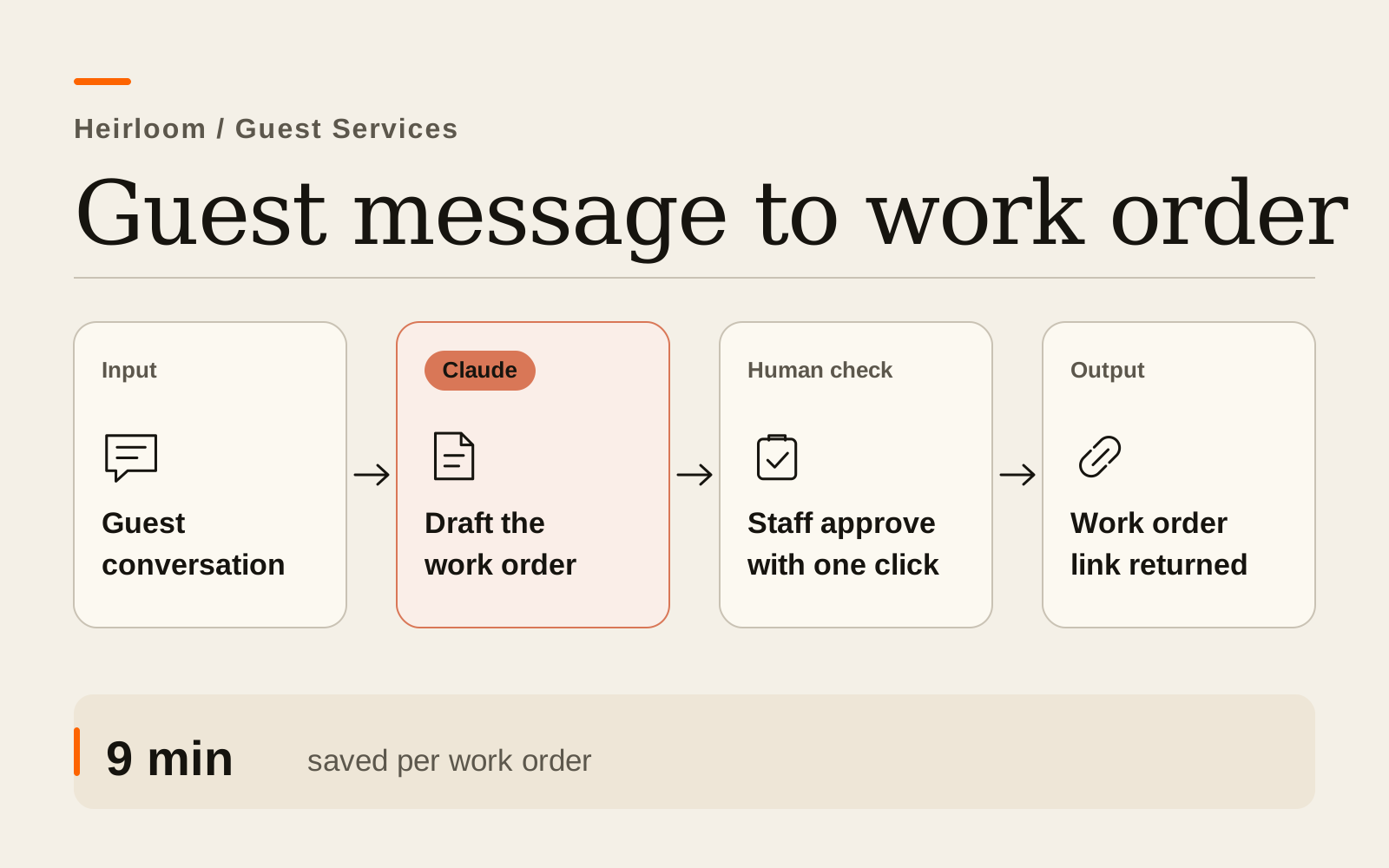
The maintenance workflow first ran alongside the existing dispatch process across eight markets. Staff could compare its recommendations with their own work. The team then moved to one-click approval that creates the work order and returns a link.
Use review feedback in later runs
Accountants can mark each flagged entry as legitimate, a false flag or uncertain. That feedback informs the next ledger review, and accountants make every correction.
What we built
Daily pool photo checks
A 1 p.m. camera snapshot is classified as clean, dirty or covered, and a Slack table shows the photo and flags problem pools before check-in. The report also lists pools that lack a usable camera.
Code enforcement monitoring
A daily checker reports which New Orleans properties are clear, flagged or could not be checked. A new violation generates an Asana ticket with the evidence attached, and duplicate notices are skipped.
Ledger review by exception
The workflow reconciles totals in Sage Intacct and screens entries against the accounting team’s rubric. Accountants review the flagged lines and make any corrections.
Maintenance work orders from guest messages
The automation drafts a work order from a guest conversation about a problem such as faulty air conditioning or plumbing. After a dispatcher approves it, the work order is created and the link is returned.
Review monitoring and draft replies
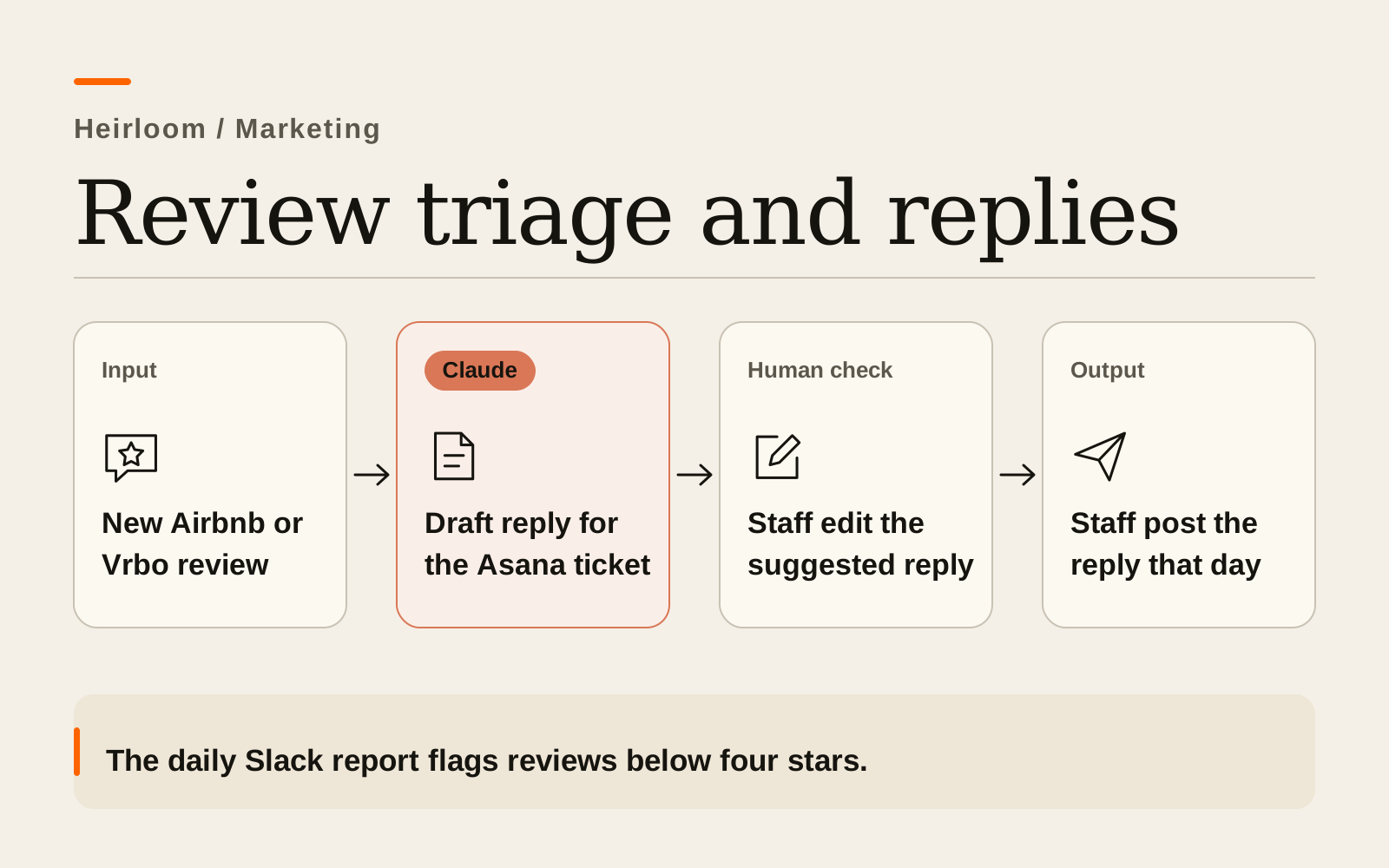
New Airbnb and Vrbo reviews generate Asana tickets with draft replies staff can edit and post. A daily Slack report tracks scores by market and flags reviews below four stars.
Reviewed pricing updates
The workflow reads the weekly pricing notes and proposes structured changes for the spreadsheet. Staff preview and approve changes, and the write process rechecks the target, limits the columns it can edit and logs the change.
Where AI fits
Barq used AI to classify pool photos and draft text from guest conversations and reviews. Dispatchers approve work orders, guest services staff edit and post replies, and accountants decide whether to correct a ledger entry. Scheduled jobs and rules handle other parts of the work, including checking the city portal, skipping duplicate tickets and reconciling ledger totals.
Results
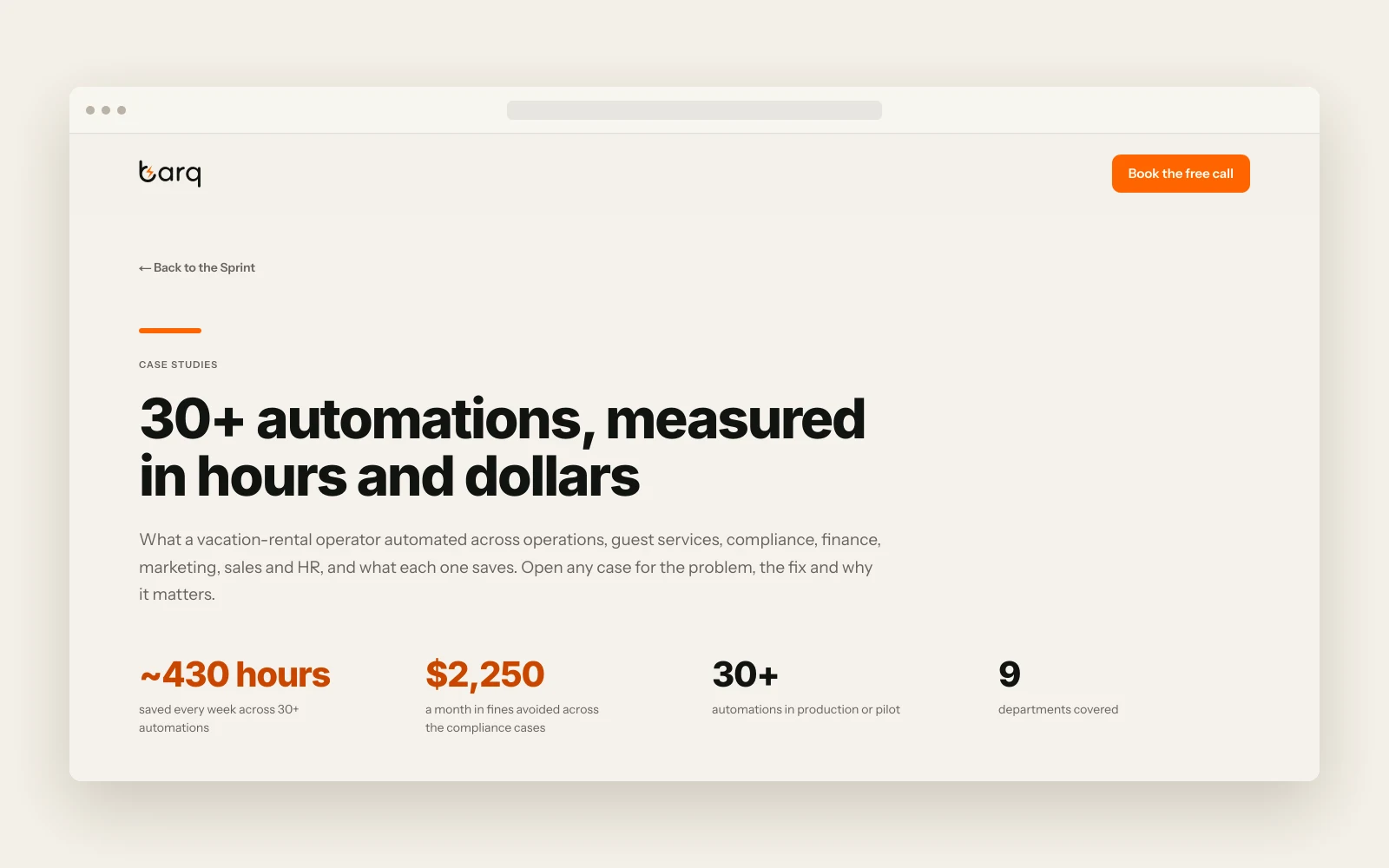
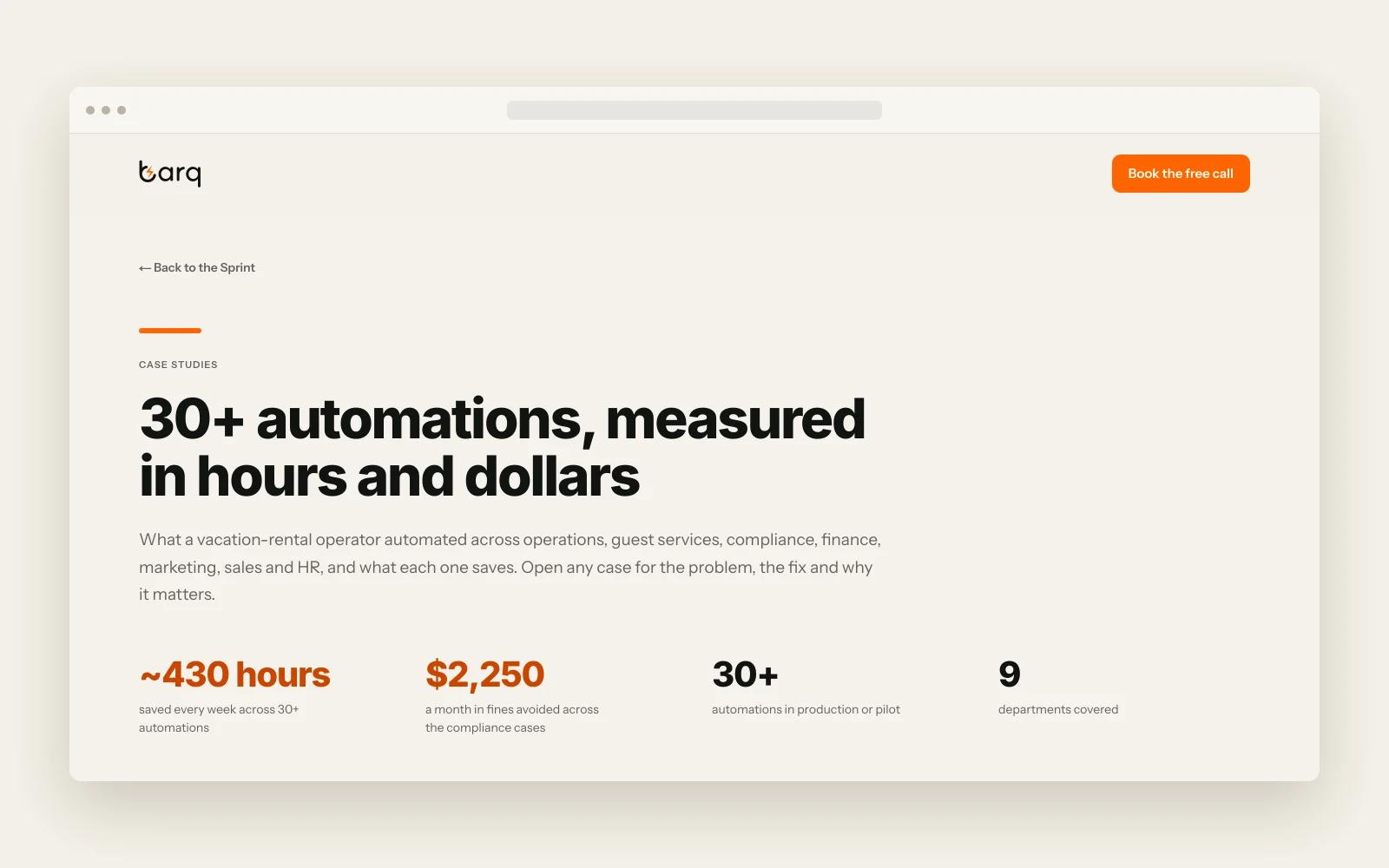
- Heirloom reports saving 430 hours a month across 30+ automations.
- 30+ automations in production or pilot across 9 departments.
- Barq’s published automation series reports $2,250 a month in fines avoided across the compliance cases.
- Heirloom’s reported time for a maintenance work order fell from about 10 minutes to about one minute.
- Accounting reports that its monthly ledger review fell from about 40 hours to about three.
Under the hood
These workflows connect systems at specific points in the work. Sage Intacct supplies ledger data, and Slack and Asana receive outputs for staff review. The compliance checker also distinguishes a clear result from an unsuccessful portal check, giving staff a way to follow up on gaps.
Tech stack
- Slack
- Asana
- Sage Intacct
- Claude
- Google Sheets